k-art in copenhagen
Please describe your arrival in Denmark and first impressions of Copenhagen.
I was born in South Korea and grew up as an adoptee with my Danish family in Horsens, near Aarhus. I found my biological family in my 20s and visited South Korea several times afterwards. Now I live in Copenhagen.
I first learned about Copenhagen in primary school via the former King Christian IV, a man who founded some of today’s biggest tourist attractions such as Rundetaarn, Boersen, Rosenborg Slot, Nyboder, and Christianshavn. In primary school, we also visited Kronborg Castle where the legendary warrior, Holger Danske, sits and protects the country. This was a proud, strong identity, and a linear historical narrative of Danish culture.
Growing up in a small town in Jutland, I never got to experience the development and atmosphere of Copenhagen in the early days.
Today, I continue to explore the small joys of Copenhagen and search for places I feel comfortable in a city constantly in flux. One aspect I want to highlight is the vibe and kindness of people in the North West area of Copenhagen and Noerrebro. Here, you notice the diversity when walking around, and you can spot new pop-ups often. Otherwise, I enjoy trying small wine bars or the latest Korean restaurants downtown.
How would you describe the creative energy or art scene in Copenhagen?
I feel the creative energy reflects the contrast between the already established art institutions and those artists struggling to find platforms from which to be seen. You have to be good at finding communities if you want to build up your collaborations and shows. In Denmark, there are some inclusive platforms that are not restricted by the artists’ education, age, gender, ethnicity, and disability. However, they too require persistence, insider knowledge, and luck.
Have you collaborated with local artists, institutions, or communities?
The exhibitions I have participated in are scattered around, not only in Copenhagen. One exhibition was in Helsinki, back when I studied painting under Elena Merenmies. In collaboration with the student union of the University of Helsinki, the exhibition was centered on the question: when is something ready and what does readiness mean in a painterly context? We were interviewed for that exhibition and I continue to carry this question with me when I paint.
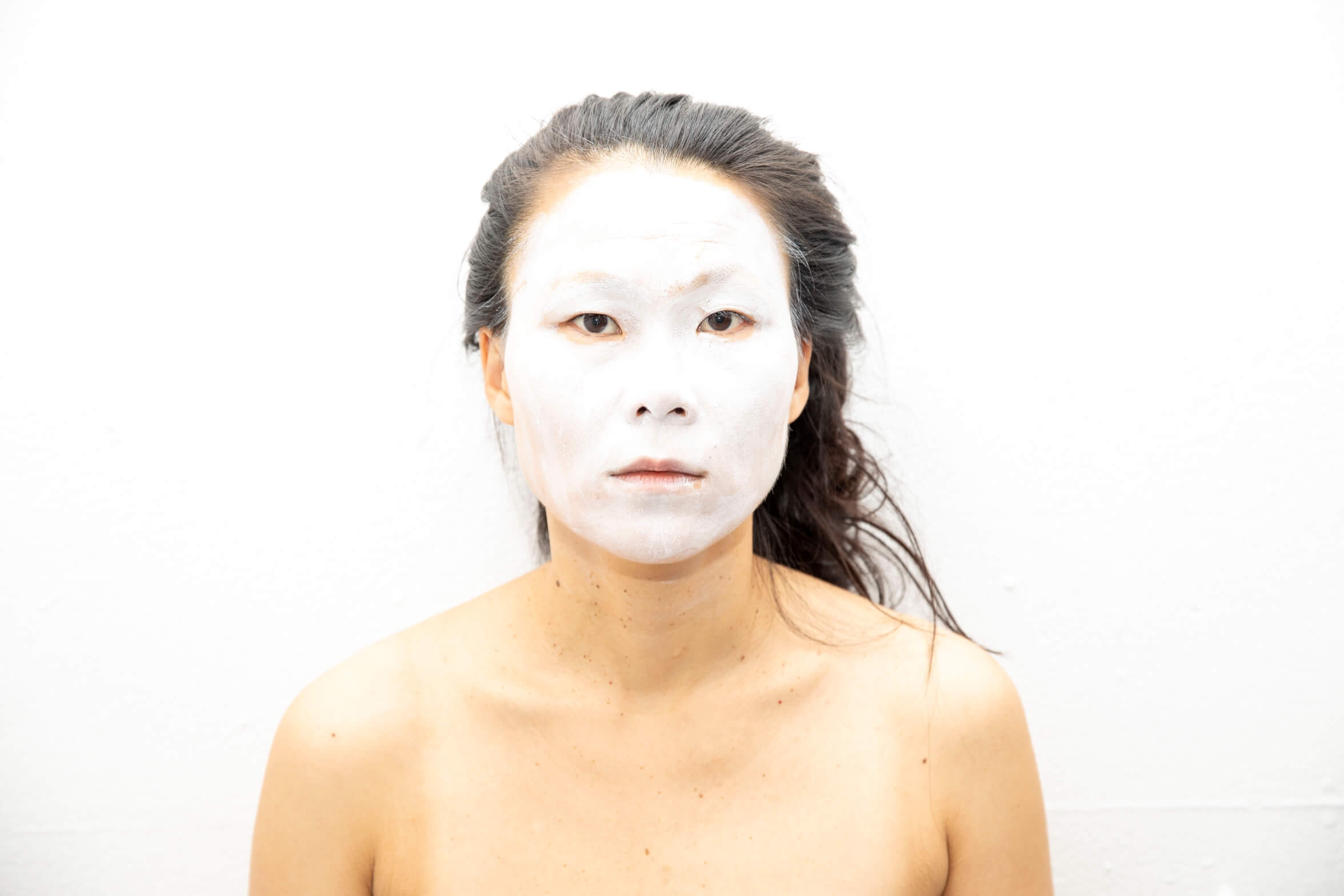
My art practice is based on the phenomenology of being transnationally adopted. I feel that all exhibitions are important to spread this knowledge and for developing a language for myself and other transnational adoptees.
I have also exhibited oil paintings in the Street Gallery in Noerrebro, Copenhagen. This was a serial work, critical of the “adoption industry” and titled as such. I knew that the adoption scandals would become visible in Danish news shortly thereafter, so for me, it was an exciting time to have those on display.


What is one moment, project, or exhibition in the city that you will never forget?
In 2023, I won the audience award at the Artist Easter Exhibition in Aarhus Art Hall while studying at Aarhus Art Academy. I exhibited two oil paintings and a video performance, all reflecting on the experience of being a Korean adopted in the West.
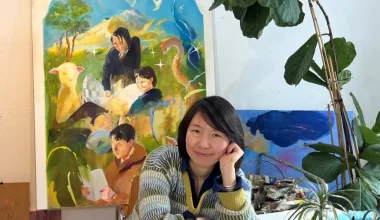
This year, I participated in two group exhibitions in Germany under the Korean German curator and artist Il-Jin Atem Choi. I had four of my Banana series paintings exhibited and it is always interesting to observe the spectator’s reaction or non-reaction to those. The paintings display Asian girls eating bananas, looking at the spectator via a mirror, and the theme continues to be relevant today.
I think the most memorable collaboration this year was a performance with a transnational adoptee group in Copenhagen, at Haut Scene, where we spent a week together talking, yelling, exploring, and finding missing sounds as transnational adoptees.


In what ways do your Korean roots continue to shape your work while living abroad?
My Korean and Danish roots are the object of my art in many ways. I have spent a great deal of time exploring what it means to grow up in a homogenous society in a white Danish family, at the same time puzzling, stretching and developing identities in the encounter with my Korean family in Seoul.


Is there a visible or active Korean art or creative community in Copenhagen?
There is an active adoptee art community in Copenhagen, who are talented and visible. You can also encounter Korean art in Copenhagen, however it is rare and less visible. In general, Korean pop-culture, skin care, and food are all in their hey-days in the city, popular among younger audiences. Maybe this is why I have felt a positive difference in the way people approach me these days? However, I still meet people who use racial slurs and exhibit similarly inappropriate behavior.
If you had to describe Copenhagen as a creative “material,” what would it be and why?
Copenhagen is movement and the sound of the wind in one’s ear. It is laughter and the sound of talking loudly, that was my first impression of downtown Copenhagen.
Where in the city do you go when you need to recharge creatively?
I like to recharge in the area around where I live in the North West of Copenhagen. There are not many tourists yet and the streets are quiet. Yet, the many parks and cemeteries of Copenhagen are beautiful and peaceful. Also, if you want access to the water, all you need to do is hop on a bike or stroll through the city to the nearest coastline.
If an artist were to visit Copenhagen for a month, what would you recommend they do, see, or experience?
I would recommend visiting Vestre and the Assistens Cemetery, Botanical Garden, and SMK. Take a walk in the Kings Garden and eat marzipan bread at the Orangeriet. Eat Italian in Christianshavn, walk around the Kastellet down to Amalienborg, and sit by the inner harbor at Nyhavn on a summer’s evening. Go to Noerrebro and Vesterbro for shopping, food and secondhand shops. Maybe take a boat trip and visit some galleries and museums, such as Copenhagen Contemporary, Charlottenborg, and Gl. Strand.


What are you currently working on and how do you imagine your relationship with Copenhagen evolving over time?
I am very fortunate to have the opportunity to dive further into the art project, The Sound of the Missing Sound at Haut Scene in Copenhagen Primo next year. Otherwise, I am circling and sketching for ideas for a new palette and materials which have more of a Korean or East Asian undertone. I hope I will take part in more meaningful projects and collaborations in Copenhagen.