k-art in berlin
Have a wander through Helena Parada Kim’s migrating gardens.
Born in Cologne and raised in the Rhineland, Helena Parada Kim went on to study at the Kunstakademie Düsseldorf under Peter Doig, where exchanges across borders were encouraged and local encounters with fellow artists played out spontaneously in the streets. After graduating, she relocated to Berlin in search of new possibilities, embracing the city’s scale and building new connections with great perseverance.
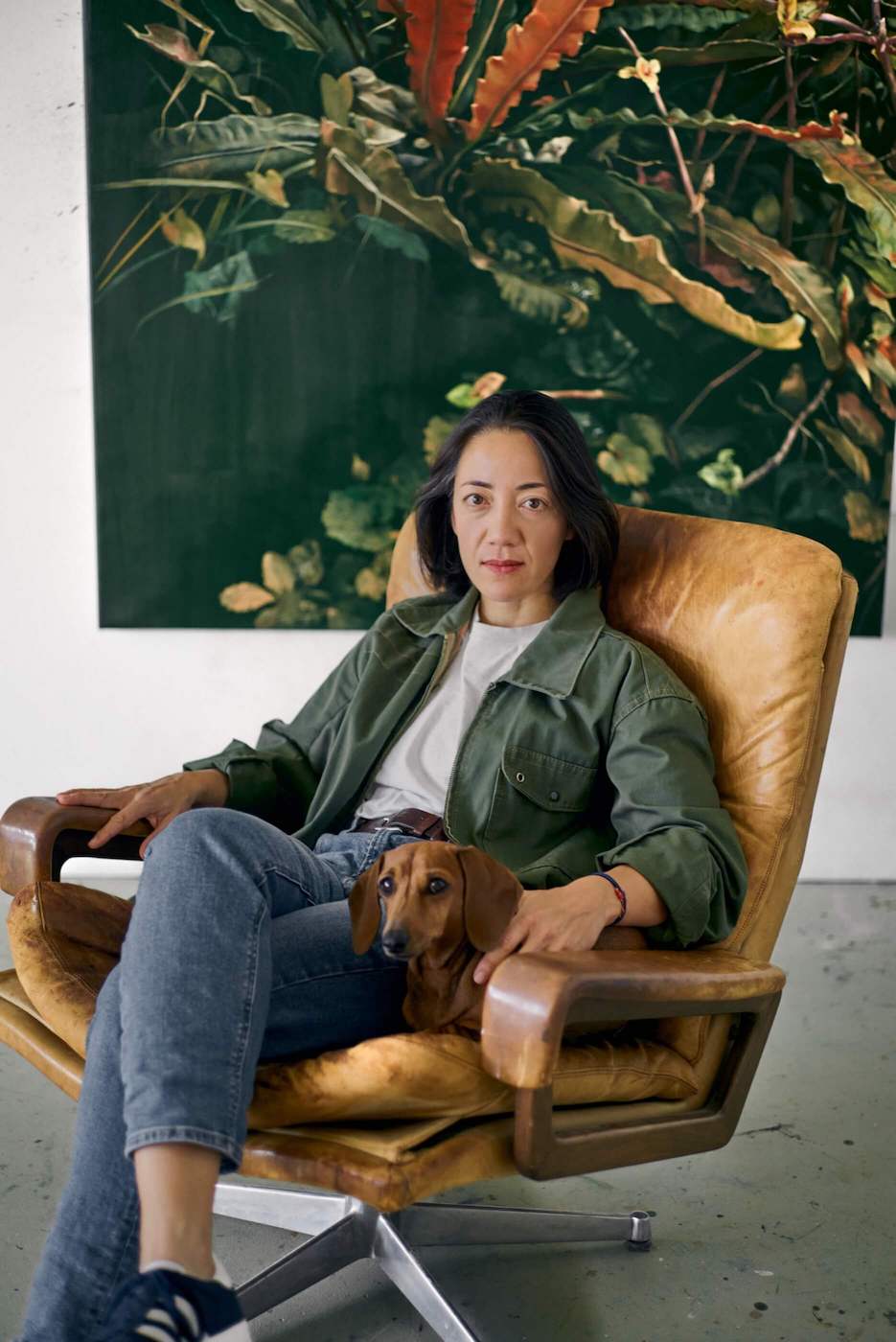
Since then, Helena has participated in a select few Berlin-based exhibitions, with many of her larger shows taking place further afield. Nevertheless, Berlin has provided a set of unique conditions integral to her practice. Of particular note is her studio in Oberschöneweide, a former center of electrical industry that has shifted from production to abandonment and, more recently, cultural and creative resurgence. Within a large, listed building, she has found a balanced space that accommodates introspection and the physical demands of painting. The adjoining garden, where she cultivates plants that later appear as motifs in her works, extends this environment meaningfully beyond the studio walls.
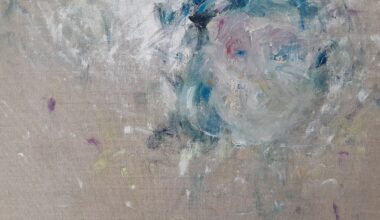
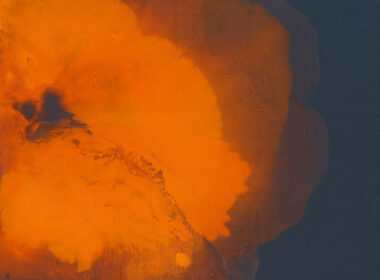
In her oil on canvas botanical studies, Helena paints plant life with careful attention to light and surface, capturing gentle variations in texture and color. In many respects, the natural sanctuary on her doorstep has grounded her practice in growth, seasonality, and ultimately the passage of time.
Her work is further anchored in a consistent set of concerns pertaining to migration, collective memory, and transmission. This is evident in her Hanbok series, garments brought to Germany decades earlier by women of her mother’s generation. Similarly, her still life works draw upon the Korean ritual of jesa, reinforcing the continuity and persistence of cultural ties over time. Here, arrangements of food function as atmospheric compositions, breaking free from the visible realm to meditate upon the forces of mortality and remembrance across borders.
Helena’s father, originally from Spain, had once lived as a monk before settling in Germany, while her mother arrived from Korea in the 1960s as part of the guest worker generation. Her time in Berlin epitomizes a desire to connect with these roots, highlighting how intergenerational histories, intersecting cultures, and inherited traditions continue to influence that which is seen in the present, as well as the myriad of hybrid identities yet to come.