k-art in berlin
Make the city move with Yon Natalie Mik.
For Yon Natalie Mik, arriving in Berlin meant learning how to slow down.
Yon Natalie spent years living in Los Angeles, where the pace of artistic life and the pressure to sell work felt relentless. Eventually, she began to long for an alternative rhythm, one that would allow her to create without constantly performing productivity.
Though she was born in Germany and grew up in Düsseldorf, Berlin presented Yon Natalie with a different proposition altogether. There was an unusual flexibility about the place, a sense that people judged one another less harshly and privileged more room for experimentation and a certain degree of necessary nonsense. The city seemed to flow of its own accord, crafting spaces in which creative minds could listen more considerately to the beat of their own impulses.
Yon Natalie describes Berlin as an “ugly city,” lacking the visual elegance or architectural harmony that might seduce the eye at first glance. Though its streets are often grey and buildings here uneven and improvised, this lack of coherence has become one of the city’s most compelling qualities. In fact, much of Berlin was destroyed during the war, and its identity continues to be shaped by those who arrive and rebuild it in fragments. Rather than forming a polished whole, it spreads outward like a patchwork of mismatched pieces. In Yon Natalie’s view, this spontaneous disorder has discouraged rigid expectations and permitted ideas to emerge with greater freedom.
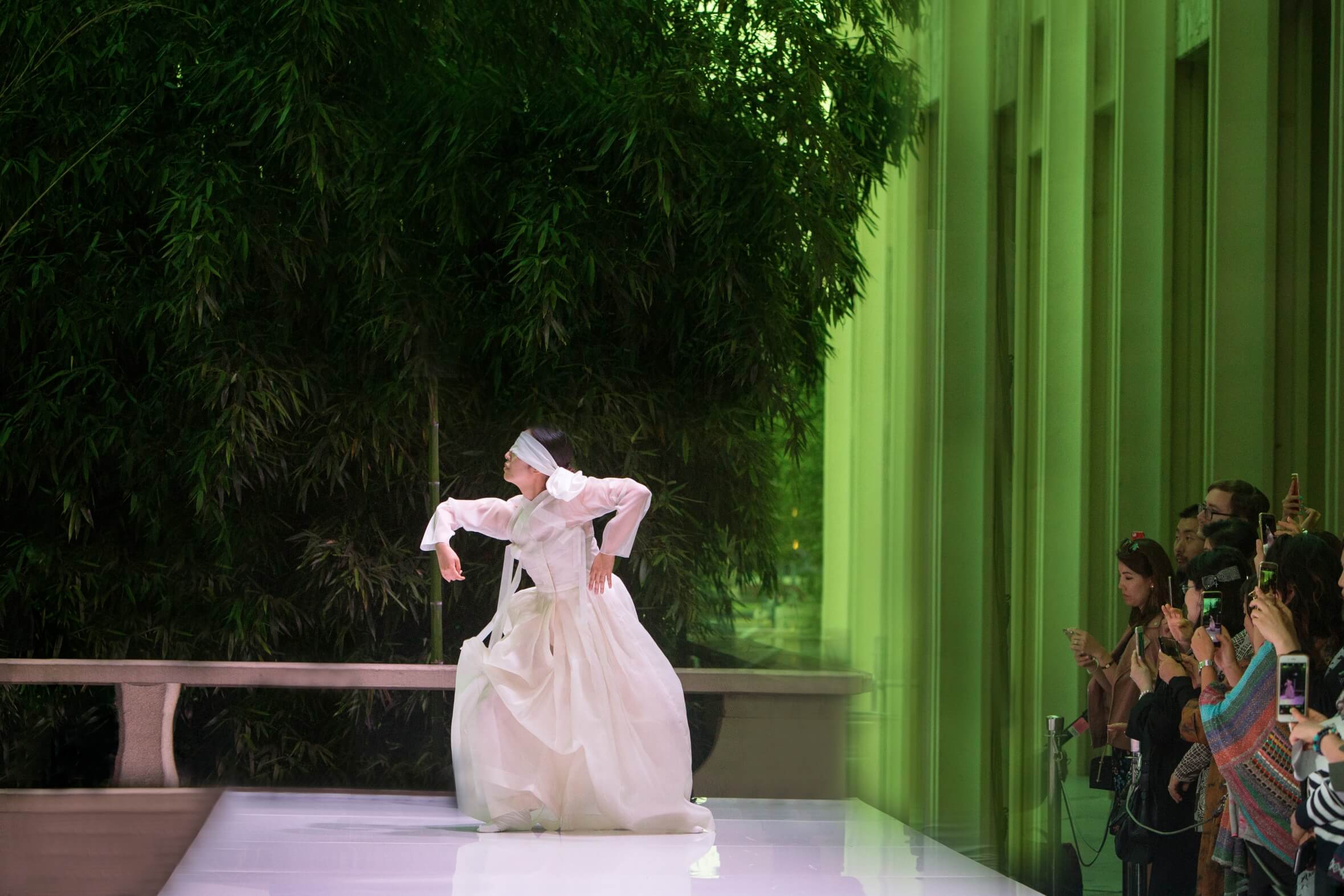
In the early days, Yon Natalie performed in subway stations while attuning herself to the inclinations of passersby. She notes that Berlin’s openness does not erase its contradictions. Today, xenophobia and discrimination operate in subtle and overt ways, amplifying Europe’s illusion of cultural progress and the local tendency to marginalize those who fall outside of dominant norms. These tensions are also visible in the art world itself, where institutions often encourage artists to create aesthetically pleasing works that bypass political realities at play. Nonetheless, this enforced separation between art and life has sharpened Yon Natalie’s sense of responsibility as an artist. Ultimately, if cultural spaces opt to shirk uncomfortable truths, then artistic practice becomes a platform from which to bring sidelined conversations into the light of day.
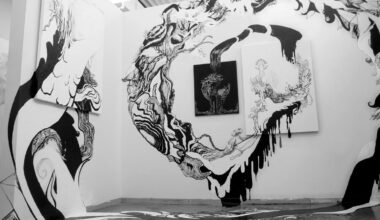
A visual artist and dancer, Yon Natalie produces live and video performances that blend choreography with poetry, sculpture, and installation. Within these environments, choreography functions as a form of research, and movement becomes a language for understanding how bodies and relationships travel across time and space.
Interestingly, Yon Natalie does not draw much inspiration from a Berlin art scene that she believes censors the most standout and provocative works. Instead, she turns toward the city’s layered archives, where unresolved stories linger. Among these traces is the history of her own mother, who migrated to West Germany as a nurse through the Gastarbeiter program in 1971. Drawing from feminist inquiry, non-extractive fieldwork, and speculative fiction, her current research explores intimate labor, ghost work, ancestral healing, and the networks formed by women in migration.
As an artist living with a chronic illness and member of the Sickness Affinity Group, Yon Natalie also pays close attention to what is often called “crip knowledge” and the entanglements of race and disability within schools, cultural institutions, and public spaces.
In all its fractured glory, Berlin provides an ideal backdrop to reflect upon the uncertainties and unrealized dreams carried by previous generations, as well as the invisible structures and barriers to entry that define the true fabric of everyday life for so many.