k-art in copenhagen
What were your impressions and experiences of Denmark while growing up?
Being a child in Denmark in the 70s, I took part in an almost naïve time of positivity. Back then, the notion of a “good life” was formed via Sunday excursions in a small car, lunchboxes at the side of the road and long-distance vacation trips to Sweden or Germany. Being young in the 80s formed my idea of creativity, allowing me to experiment and question the norm. The explosion of music videos and mainstream color tv offered easy access to inspiration and an understanding of different views and approaches to visual aesthetics.
I moved to Copenhagen and stayed there with breaks, living for a couple of years in NYC as well as shorter stays in other European capitals. During the 90s, I witnessed Copenhagen developing into a more international capital with the exchange of foreign artists and students. In the 2000s, I reconnected with Korea which would become a lifelong complex relationship I still try to grasp and feel a part of to this day.
In the latter years I have experienced a Denmark marked by a political influence I fear will divide the country and increase xenophobia and conservative values. The space for challenging and questioning the existing structures has decreased but I feel it makes the work of artists that much more important.


How would you describe the creative energy or art scene in Copenhagen?
I imagine that there is a discourse or a mainstream thread that characterizes the Danish art scene. With less than two million people in Copenhagen, the art scene is relatively small. For me, this brings with it positives and negatives. The positive is that it is relatively easy to form a community and the artists you know are supportive and caring. The negative side is that as a small community, there tends to be an invisible hierarchy that is hard for outsiders/foreigners to overcome or understand, making exchanges less frequent.
But personally, I find creative energy everywhere. I love the food scene and often attend underground concerts and smaller events just to feel the energy of small startups. There is a very rich organizational culture with all kinds of small organizations popping up. So, I find and feed from the micro cosmos that Copenhagen offers when you dig into the corners and nooks.
Have you collaborated with local artists, institutions, or communities?
I do collaborate and form collectives, very often to ensure emerging and struggling artists have a platform made possible by my privileges.
In general, there is a very close collaboration between my grassroots work within the adoptee network, and my work with a group of adoptee artists on a performative sound piece (in collaboration with HAUT in Copenhagen). We are working intensively in sprints, each week researching forgotten and invisible sounds from our origin in order to regain control of what has been taken from us.
Secondly, I work at the moment with two other artists in a collective called “The Clinic,” where we develop a practice about mental health and how it impacts an artist’s body. The challenging experience of living in the diaspora takes an invisible toll on the diasporic body regarding mental health. Having to display a capable body and mind in order to step into the current context and culture creates a very fragile position in reality, where weakness, loneliness and other mental health issues can be hard to accept and display. I want to create an art space and practice where people with alternative needs, pasts and priorities can create and be recognized equally by those of us who experience less challenges. It is a very demanding collaboration, but also the one where I have and still learn the most.
For me, one of the most interesting collaborations I took part in was the Indonesian curatorial collective Ruangrupa’s radical Lumbung idea carried out at Documenta in 2023. There, I learned about the resilience of a collective and the integrity of a meaningful practice despite pressure and capitalistic demands.


Has the city changed your artistic practice in any way?
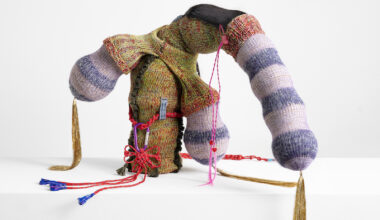
You cannot live anywhere without being inspired visually and mentally by the place itself, the audience you get in contact with, and the recognition you receive. Right now, I am conducting research on folklore and the way clothes carry an inherited tale of lived circumstances. As such, I pay attention to textiles people use on the street as well as the forms of their clothing and symbols of ornaments.
What is one moment, project, or exhibition in the city that you will never forget?
I have several unforgettable memories, both good and bad that shaped what I am today. But, I think one of the exhibitions that sticks with me is the biennale in Ireland, 2026, curated by the belated Koyo Kouoh. The topic was excellent and she did an amazing job given the budget provided. I met such a lovely bunch of artists and I will always cherish that memory.
In what ways do your Korean roots continue to shape your work?
They are present in everything I work with. I am on a never-ending hunt to reclaim my Korean heritage that was taken from me at an early age. But I cannot escape the feeling of never owning it or having the right to access, so I feel every sign and artefact from Korea is a simulacrum, an overexposure from my side in order to play with signs I really cannot access.
It creates a deep sorrow within me. Yet, I still insist on trying, believing my art is the purest platform, where I can incorporate everything lost. Here, I can bend reality to fit my aesthetics and here I can demand for things to make sense.


Is there a visible or active Korean art or creative community in Copenhagen?
There is a visible Korean adoptee artist community which I am a part of. It is not formally set, but again, as Copenhagen is such a small city, we all know each other as well as each other’s work. I have collaborated with several of them and I am quite proud of the Korean adoptee artists and other adoptee artists delivering a quality and important discourse within the Danish art scene.
I have had contact with Korean artists, but they are often here for a shorter time and very few are settled permanently. I have nonetheless enjoyed working with Korean artists passing by.
Have you observed any interest or reception toward Korean art in your city?
Korean art and Korean culture is trending when it comes to film, food, cosmetics and art. Several Korean artists have exhibited in Copenhagen and I have enjoyed and been proud to witness their exhibitions. The first K-beauty shops have emerged and I also like to visit the new Korean restaurants popping up.
It is fun to talk to young people and kids about KPop Demon Hunters, and my guess is that Korean clothes and textile design have a shot of making it big in Denmark.
If you had to describe Copenhagen as a creative “material,” what would it be and why?
Copenhagen is wood, very characteristic aesthetically but a versatile and flexible material within its own limits. It seems soft on the surface but can splinter and poke you. Even when worn, it is still beautiful.
Where in the city do you go when you need to recharge creatively?
Basically, I always leave the city to recharge over several days as I am a forest person. Fortunately, I can also go to the ocean and one of the city’s many parks. In the winter, I go to the old green house also known as the Palm house in the botanical garden. There are fish and butterflies here, and it is completely free to visit.
If a Korean artist were to visit Copenhagen for a month, what would you recommend they do, see, or experience?
First and foremost, they should take advantage of the fact that Copenhagen is a very old European city that faces the ocean. So, visit some historical sites, eat at some old restaurants such as Schønnemann to sample the famous Open Sandwiches and La Glace for really heavy cream cakes baked from recipes more than one hundred years old. Also, visit the seafront. Depending on where you are, there will often be beach bars, live music, and opportunities to take a swim.
Copenhagen is an expensive city but there are so many free options. You can watch the Royal Guard march through the city, and in the summertime, check when Tivoli has its fireworks and enjoy it from the outside. Go to the old central station also, or the many green spaces around the city.
Copenhagen is wonderful by bike or on foot. There is so much public art in the form of statues and displays on squares and in parks. Remember to look up and enjoy the many small towers and spears on the houses (Copenhagen is also referred to as the city of a thousand spears).
If you want to sail on the water, try the inexpensive Waterbus that transports you from inner Copenhagen to one of the small islands. You will see the opera and other historical sites during the ride, and you can hop on and off as many times as you like within an hour.
What are you currently working on?
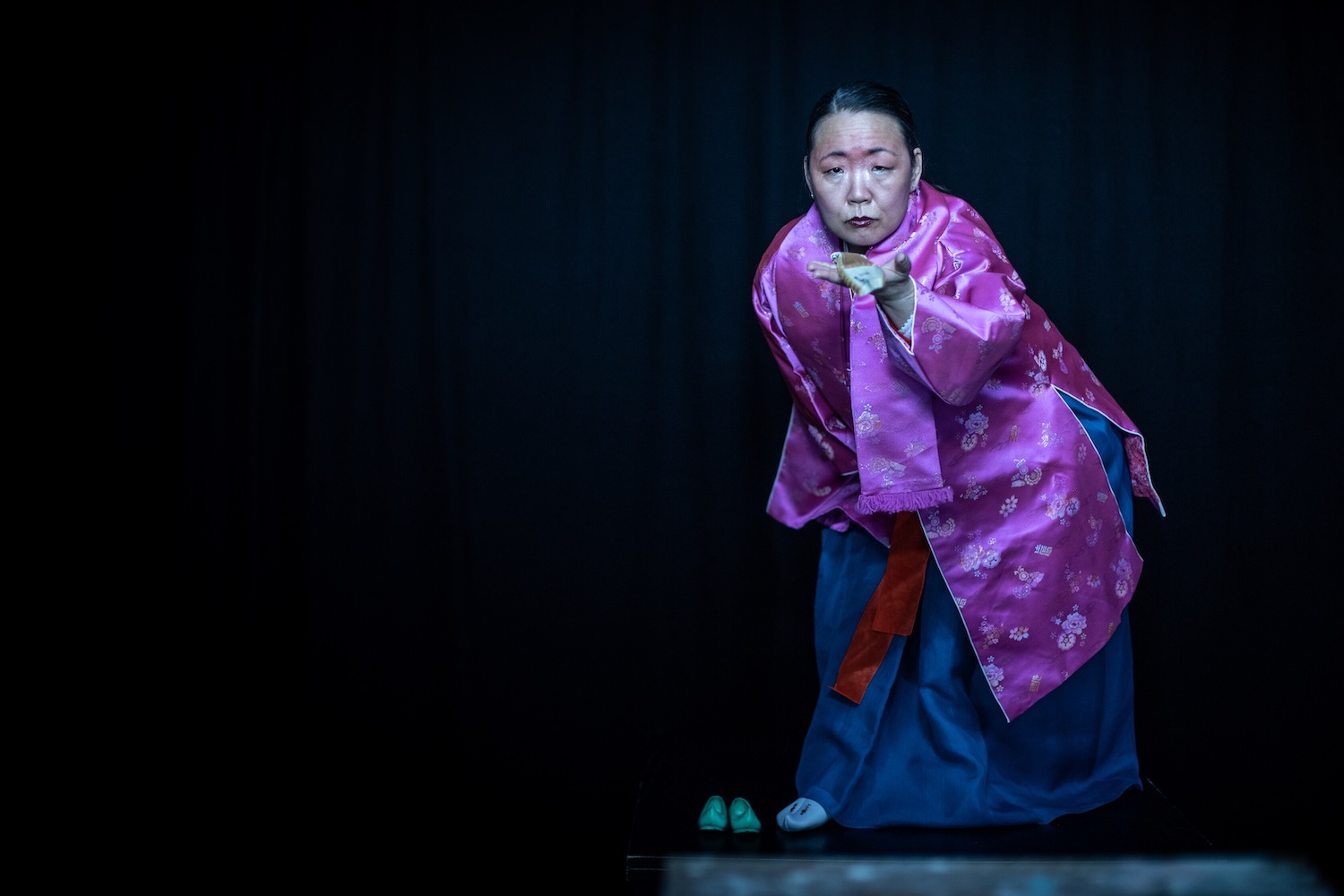
Right now, I am working on sewing a Danish folklore dress made by three old hanboks I have gotten from Korea. There is a deep part of me that wants to connect the part of Korea I possess to Danish history. An attempt to hack the Danish and Korean national history to contain me, and the way Korea chose to make me Danish. The dress will be used in a new live performance at Ikast Kunsthal in August, 2026. This major production currently consumes most of my time.
Secondly, I am quite thrilled about the performative sound work I collaborate on with three other adoptees, each with different origins.


How do you imagine your relationship with Copenhagen evolving over time?
I will probably stay here for the rest of my life since I have family and work here. I foresee one major break as I would like to move to Seoul just for a couple of years to explore everyday life in Korea.