k-art in san francisco
What first brought you to San Francisco, and what were your first impressions of the city?
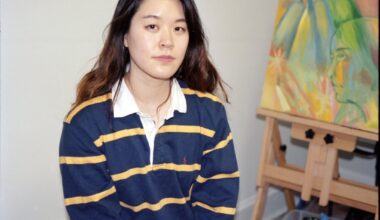
I first came to San Francisco to visit my ex-boyfriend and to study English, but the real reason I moved to the city was deeper than that. Growing up in Korea, I never felt like I truly belonged, especially in school. I was bullied a lot. I was always searching for a place where I could feel safe, and didn’t have to be afraid to express who I really am. It was meant to be a temporary stay turned into something much longer and ultimately transformative.
My first impression of the city was cold in the summer, very expensive, and incredibly diverse. I saw so many immigrants and queer people from all over the world. I loved it so much, I could smell the freedom. For the first time, I felt like I could belong somewhere. I still remember walking through fog-covered hills, seeing murals blooming on old walls in the Mission District, hearing people speak in dozens of languages, and seeing gay people living openly and proudly. It felt overwhelming and freeing at the same time. I thought this is a place where I could start over, let go of old versions of myself.


How would you describe the creative energy or art scene in San Francisco?
San Francisco’s art scene is incredibly vibrant and community-driven. You can feel its pulse in the Chicano murals of the Mission District, in the queer art and literature movements that have shaped generations, and in the spirit of activism that runs through so much of the creative work here. There’s constant art related events like Open Studios several times of every year, new galleries popping up, public art programs, funding opportunities and art fairs like FOG and the SF Art Fair that bring together a wide range of voices.
But at the same time, the art world here is layered. There are different levels of access depending on who you are. The cost of living is extremely high, and surviving as an artist in the city is tough and very competitive. It’s not easy to get into shows or find consistent opportunities to support ourselves through our work.
There are big, prestigious museums and art centers that present important and beautiful work but for artists like me, for my friends and colleagues who are immigrants or come from underrepresented communities, it’s hard to break into those spaces. Sometimes it feels like we’re working so hard just to be seen. But even with all these challenges, there’s still a powerful energy here. People care. Artists support each other.
Have you collaborated with local artists, institutions, or communities?
Yes, I’ve collaborated with local museums and nonprofits, and facilitated public workshops where my two-dimensional paintings evolved into three-dimensional soft sculptures, participatory works. These experiences reshaped me as an artist more multi-dimensional, introspective, and open to collective healing.
I’ve received multiple individual artist grants, organized solo exhibitions, and partnered with nonprofits to create community-centered art. I also serve on the board of Maitri Compassionate Care, a vital medical and social organization supporting people living with HIV and trans individuals undergoing gender-affirmation surgeries. I help raise funds, curate their annual art auction, and build connections between artists and community wellness.


Has the city changed your artistic practice in any way?
Absolutely. Living in San Francisco has changed my artistic practice in profound ways. This city taught me that art can be healing for myself and for others. It gave me permission to express my queerness unapologetically and to bring activism into the same space as beauty and creation.
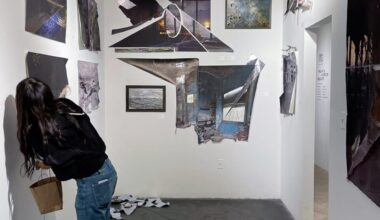
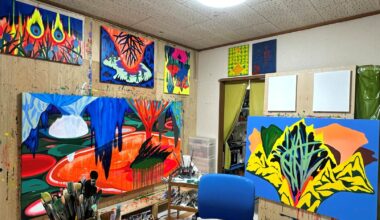
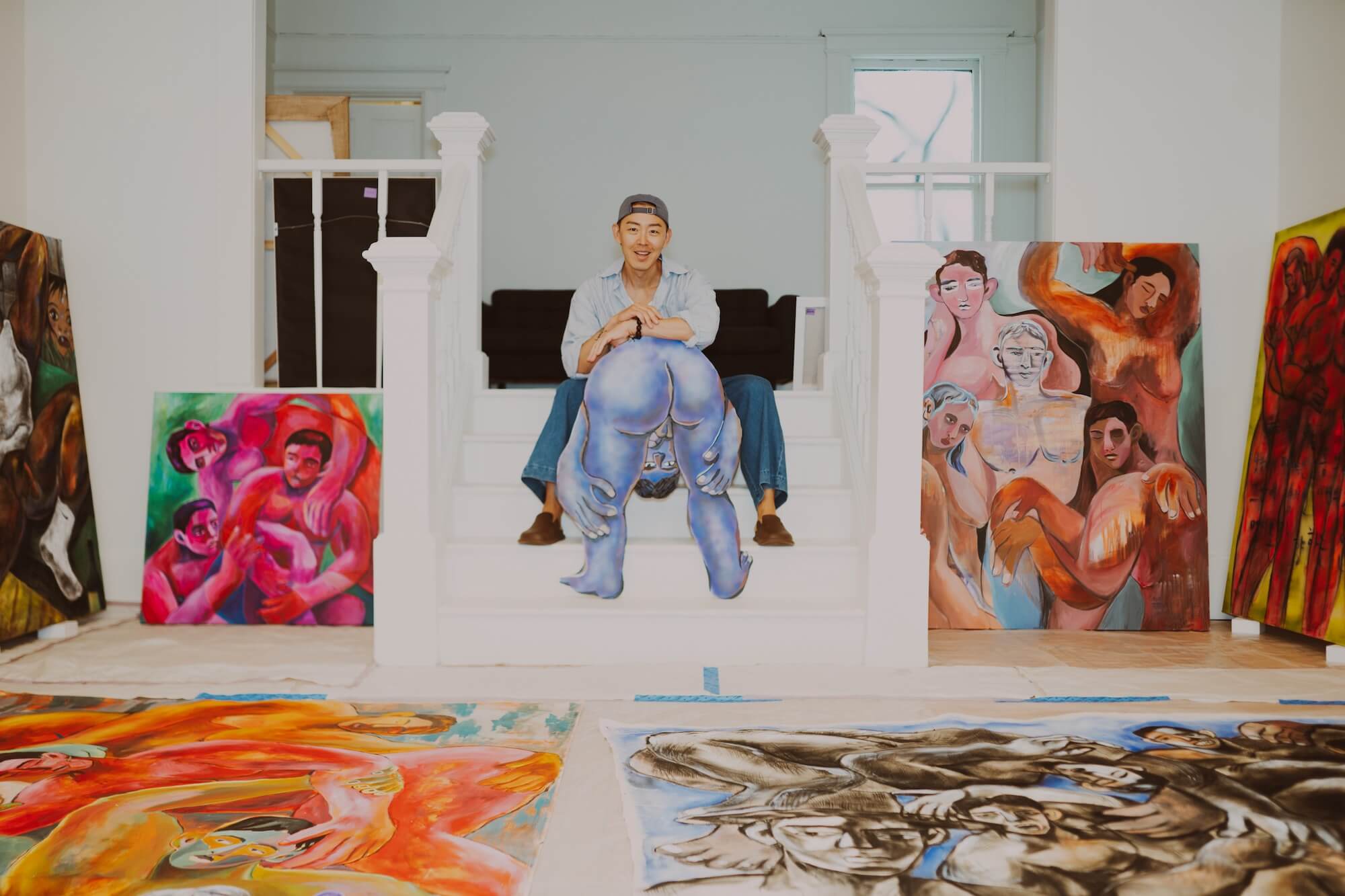
I began to explore large-scale works that celebrate queer bodies taking up space, thriving in nature, surrounded by the city. I started using recycled materials I found around the city, and I discovered residencies, classes and communities that helped me dive into new mediums like textiles, clay sculpture, and installation. These practices opened up new possibilities for me. My work became more tactile, more participatory that people can touch, feel, and connect with.
Living here, I’ve come to see art not just as a personal expression, but as a gesture of care. A way to build community. A way to create sanctuary for people like me and for those who haven’t always felt seen or safe. San Francisco gave me the space to grow into that kind of artist.


What is one moment, project, or exhibition in the city that you will never forget?
One of my most unforgettable shows was Home and Away, funded by the San Francisco Arts Commission and exhibited at the California State Senator’s office. The works were massive, unstretched canvases exploring queer bodies, identity, and freedom. At the time, I was dealing with online censorship and hate comments for painting nudity and queer intimacy. So showing that body of work in a government building felt like reclaiming a space physically and internally. It was a public act of courage and self-acceptance.
What made it even more meaningful was the community response. Over 500 people RSVP’d. There was a long line outside some people waited over 30 minutes to get in. It was just after the pandemic, and the venue’s capacity wasn’t big enough to hold everyone who wanted to be there. I remember feeling overwhelmed in the best way.
I saw people from all walks of life engage with the work such as elderly, queer and immigrant visitors, young queer kids, immigrants, and fellow artists. It reminded me that visibility is a form of resistance, and that resistance can be tender, vulnerable, and healing. I’m deeply grateful to have had that opportunity to share my work, my story, and to feel so seen in return.
In what ways do your Korean roots continue to shape your work while living abroad?
My Korean roots show up in the way I begin with childhood memory. One of the materials I often return to is 먹 (muk), traditional Korean ink. Growing up in Korea, I took traditional painting 수묵화 (Soo Muk Hwa) classes starting in kindergarten and continuing through elementary school. That early exposure shaped how I see and move through the world. I remember sitting with my mom and she shared her favorite colors and animals, especially birds, trees, and flowers. Each image had a story: the crane for longevity, the pine tree for endurance, the peony for honor and beauty. Those symbols stayed with me in the lines, the forms, and the quiet brushwork.
I’ve always loved painting on paper. In Korea, we didn’t have oil paint and canvas the way many Western artists do. We used rice paper or 한지 Hanji, and I’ve carried that tradition with me. I still work on paper today, not only because it connects me to home, but because I love how the ink moves on it and it blurs and bleeds with water, how soft and alive it feels. There’s something pure and honest about it. Paper can be fragile, but it holds so much weight.
Even when I create more contemporary or conceptual work, that foundation is always there. I see it in the curved black lines, in the shapes of bodies, and in the balance between boldness and softness. It’s not something I think about consciously, it just lives in my hands, in my body, in the way I move through the creative process. Living abroad hasn’t distanced me from my roots. If anything, being away from Korea has made me more aware of how deeply that part of me still lives in my work guiding me, quietly and consistently, every time I pick up the brush.


Is there a visible or active Korean art or creative community in San Francisco?
There are some Korean artists here but there aren’t many Korean artists here compared to other cities like NYC or LA, but the broader AAPI community is strong and supportive in the Bay Area. I’ve received warmth and encouragement from Korean Americans and local Asian organizations that celebrate cross-cultural dialogue. While small in number, I believe the Korean creative presence here is growing quietly.
Have you observed any interest or reception toward Korean art in your city?
I’ve definitely noticed a growing curiosity and appreciation for Korean contemporary art here in San Francisco. The Asian Art Museum has brought in several exhibitions focused on Korean art, fashion and culture, which has helped introduce more people to our history and creative voices. I’ve also seen Korean artists featured in major institutions like SFMOMA and the de Young Museum, which is really exciting. It feels like Korean art is becoming part of a bigger conversation not just as “K-art,” but as contemporary art that speaks to global issues like feminism, politics, Korean shamanism, hybridity, and diaspora.
At the same time, the art scene in Korea is booming. There are major international art fairs like Frieze Seoul and KIAF that are drawing global attention, and Korean artists are showing all over the world now. That visibility helps a lot especially for artists like me, who are based abroad.
When I was in Europe years ago, most people didn’t even know where Korea was. Now, people are curious about Korean culture from food and film to fashion and fine art. And in the United States, there’s a larger Korean immigrant community and a growing awareness of our history. That shift has made a big difference. It’s helpful, and honestly, it gives me more confidence to share my voice as a first-generation Korean immigrant artist living and working here.
If you had to describe San Francisco as a creative “material,” what would it be and why?
If I had to describe San Francisco as a creative material, I would say it feels like soft silky fabric mixed with sharp fragments of broken glass. The fabric wraps around you and makes you feel held and seen but the broken glass reminds you of the city’s deep inequalities, the tension between beauty and struggle. San Francisco is full of contrasts race, class, gender, culture, politics all layered and always shifting.
For me, San Francisco has been a sanctuary. It’s a healing home, especially as a queer and immigrant artist. There’s so much inspiration here: nature, the queer history, immigrant histories. It’s beautiful, but also can be extremely difficult to survive. The city is constantly shifting, and that can be both exciting and painful. But it teaches me to live with impermanence, to be open to change, move and to keep creating even when things feel uncertain.
Where in the city do you go when you need to recharge creatively?
I often go to Lands End near the Golden Gate Bridge or to the SF Botanical Garden. Being near the Pacific Ocean or surrounded by gigantic trees and plants really heal me. I like to bring my sketchbook, it helps me breathe more deeply, find peace, reflect, and reset. The sound of the waves, the smell of the trees, the feeling of sunlight or fog on my skin-it all brings me back to myself.


If a Korean artist were to visit San Francisco for a month, what would you recommend they do, see, or experience?
Go out and experience the city. Walk through neighborhoods. Visit the Mission District and see the murals. Go to the museums and big galleries, yes but also check out small artist-run spaces in places like the Tenderloin, Dogpatch, and the Outer Sunset. There’s so much happening in corners you might not expect. But more than anything, meet people. San Francisco is full of creative, smart, weird, open-hearted people. Artists, writers, tech nerds, musicians, activists, hippies, immigrants, thinkers. It’s a city that attracts creative individuals because of its energy. People are resources, so don’t be shy. Go to openings, join workshops, talk to strangers at cafes or bookstores. You’ll be surprised who you meet. And seriously eat a lot of food. San Francisco has amazing Asian food, from Korean spots to Chinese bakeries to Vietnamese pho to Japanese izakayas and beyond. Treat yourself. Let food be part of your inspiration, too.
What are you currently working on?
Right now, I’m working on my solo show coming up next year, which I’m really excited about. I’m also collaborating with the San Francisco Korean Center to lead a community workshop inspired by Korean culture, but also connected to my ongoing themes of identity, love, healing, and queerness. Another big thing is that I just started an artist residency at the Kala Art Institute in Berkeley. I’ve never done printmaking before, so I’m super excited. I’ll be taking classes, learning new techniques, and developing a new body of work there. I’ll also have a show at the end of the residency, which I’m really looking forward to. It’s a big learning moment for me, and I’m grateful for all of it.
How do you imagine your relationship with San Francisco evolving over time?
San Francisco will always be my second home. My chosen family is here. This is the city where I found my voice, my community, and the courage to be who I am. Over time, I want to keep growing not just as an artist, but as a person so I can take what I’ve learned here and bring it back to Korea. My dream is to build stronger bridges between here and Korea, to share my stories across borders. I want to create spaces where difference is celebrated, art becomes a tool for connection. I hope my work can inspire future generations especially queer teenagers, immigrant artists, and parents so they feel less alone and more seen. San Francisco gave me space to breathe and become. I hope I can help, support and offer that same space to others, wherever I go.