k-art in NYC
What first brought you to NYC, and what were your first impressions of the city?
I decided to study painting at the age of 23 and came to New York, simply because I got into Pratt Institute and because there are so many museums and galleries here.
My first impressions were mostly of art museums. It was surprising to see thousands of artworks I had only seen in textbooks and to be able to walk around until I got completely exhausted. On the streets, the diversity of people and their fashion caught my eye for a long time since it was so new to me. How dirty the streets were was also another surprise


How would you describe the creative energy or art scene in NYC?
Within the realm of galleries and artists I know, it’s interesting that the scene is open to everyone, but sometimes it’s hard to become real friends with people. During opening receptions, people are usually open and friendly, and they rarely ask about schools or personal backgrounds unless you start talking about yourself. I feel free in that environment. It’s wonderful that you can connect with anyone regardless of your background. However, I found that people who seem friendly at art events don’t easily become close friends. In Korea, that level of friendliness usually means a close relationship, but in New York, it often just means politeness. It took time to understand the difference between being polite and being close because of cultural differences. To sum up, I found it great to feel freedom and openness among artists here.
Have you collaborated with local artists, institutions, or communities?
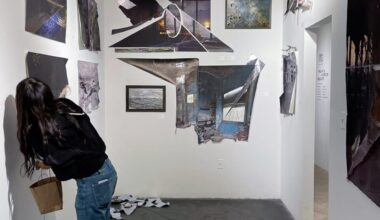
I was in the Ankhlave Arts Alliance residency on Governors Island from September to October, which just ended. We had open studios every weekend, and it was a great opportunity to meet local artists since there were several other residencies on the island. I also held a collage workshop called “Assemble Your Alien,” where participants assembled printed body parts from my paintings to create their own characters. That was a collaboration with the community. I wanted to convey that my paintings are about accepting what’s happening in my life, and I think creating their own aliens helped participants both understand my work and reflect on self-acceptance.
In addition to the workshop on Governors Island, I’m currently conducting the same workshop series with high school students at Yonkers Arts, an art institution that supports the local community. Another session will also take place in Manhattan soon. Except for the one held during the Ankhlave residency, all these workshops are in collaboration with a startup called Lynkable, whose founder, a New Yorker, reached out to me through Instagram. I believe this experience truly reflects the openness of New York’s art scene.


Has the city changed your artistic practice in any way?
My mindset has changed. Back in Korea, I believed the essence of life was efficiency. I still think about how to work efficiently, but I no longer believe life itself has to be efficient. I had to give that up after facing so many things beyond my control here. The U.S. can be slow for no reason; trains get delayed all the time, subway lines change constantly. I gave up on efficiency and ironically became more generous toward others, realizing that people might have their own reasons for doing something that doesn’t look ideal.
What is one moment, project, or exhibition in the city that you will never forget?
In August 2023, I had my first solo show “Perfect Kidnapping” with the help of ChaShaMa, an art organization that matches artists with local landlords willing to lend spaces when available. The one moment I will never forget is the opening day of that show. It wasn’t in any art district, and it happened only three months after I graduated with my BFA from Pratt Institute. I didn’t really know how to prepare for an opening and was nervous that no one might come. However, many people came one by one, and I still remember them. I’m grateful to have met them and remain in touch. Even after the show, they’ve been the people who supported me whenever I was stuck or needed help with something I couldn’t solve alone.


In what ways do your Korean roots continue to shape your work while living abroad?
I’ve been listening to Korean news, especially political news, since I was 15, and I still listen to it and related podcasts while painting. They help me stay focused without getting overly emotional, unlike music, which can draw me too deeply into my feelings and make me forget about the viewers. Thanks to that habit, I still identify as a solid Korean, strongly as Korean, even after eight years abroad, and my friends who visit me are surprised that my language hasn’t changed. Also, I think about my Korean roots more now than when I lived in Korea, since people often ask where I’m from. With K-pop and Korean culture becoming more popular, it’s easier to share where I’m from with pride.

Is there a visible or active Korean art or creative community in NYC?
There definitely is an active Korean community in New York. I was in a group show celebrating Korean Liberation Day this year, hosted by Koreans, and I met many Korean artists there. A Korean artist I know shared the open call for the show, so I applied to it. I think the community is often centered around certain schools that have many Korean students. However, there weren’t many Koreans in my major at Pratt, so I haven’t yet found a Korean artist group I can fully belong to.
Have you observed any interest or reception toward Korean art in your city?
Yes, definitely, and it has changed a lot. When I came to New York eight years ago, K-pop wasn’t mainstream, it was more of a niche interest among BIPOC audiences. Now, there’s much broader interest in Korean art and culture in general. Sometimes, simply being Korean or using the Korean language is perceived as cool. I also see more Korean artists being accepted into residencies, exhibitions, grants, and magazine features.
If you had to describe NYC as a creative “material,” what would it be and why?
I don’t usually think of New York as a material, but its complexity and the way different scales coexist remind me of my work. Multiple figures with hidden details spread across the canvas, mirroring the city’s layered structure.


Where in the city do you go when you need to recharge creatively?
I like to recharge creatively by spending time in different cafés. I enjoy going to places like Dévocion or DeBu Tee, sipping coffee, and letting my mind wander. Being in those spaces helps me clear my head and return to painting.
If a Korean artist were to visit NYC for a month, what would you recommend they do, see, or experience?
I’d recommend researching both well-known and smaller galleries, not just major museums. Visiting small galleries during opening receptions can be a special experience, as you get to meet artists, share stories, and connect through social media. I’ve become friends with artists that way, keeping in touch online and meeting again years later. Even if you’re introverted like me, it’s not too hard to start conversations at openings — talking about art makes it easier.
What are you currently working on?
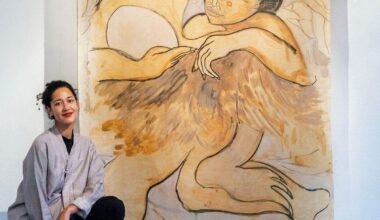
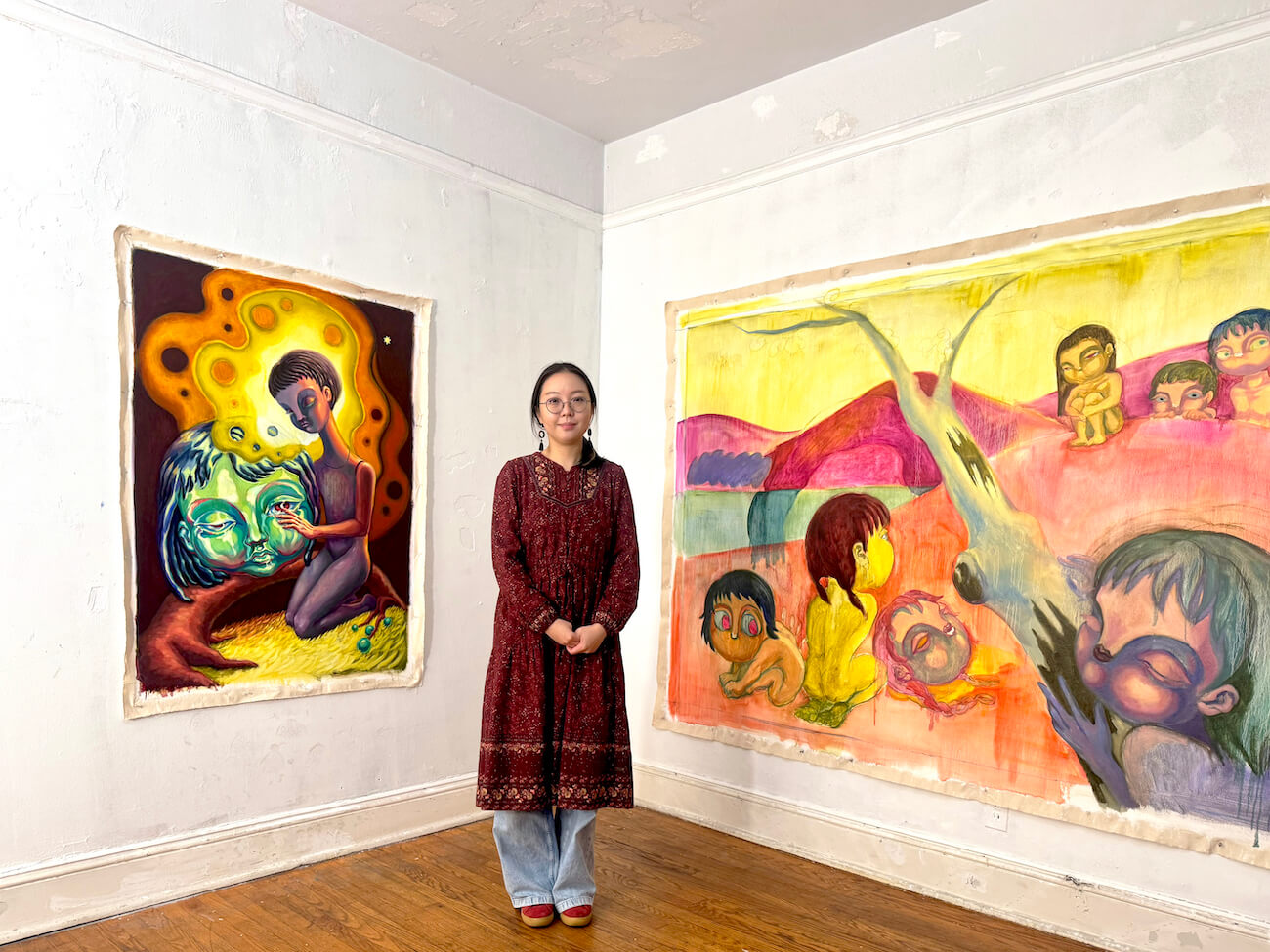
I just finished an artist residency and am continuing the works I couldn’t complete there. My paintings feature round-faced, nose-less characters who suffer or act violently. The recent series adds more environmental elements, making the scenes uncanny and surreal, reflecting themes of cultural estrangement and existential questions. Creating their environments, far from natural or normal, raises more questions and interpretations, making viewers curious about how the characters survive.

I will also be in a show, “The Gift of Art,” at Hal Bromm Gallery in Manhattan from December 2nd to 20th. It will feature a large tree decorated with small artworks as ornaments. I’m participating with three small paintings, which will hang from the tree with strings.
How do you imagine your relationship with NYC evolving over time?
It’s complicated, almost like a toxic love relationship. I think I’m mentally distancing myself from the city, even though I’ve never been deeply attached to it. I’ve just been enduring it all along, maybe because I don’t fully belong here. Still, I haven’t found another city to replace it. New York attracts many artists I admire and has the highest concentration of shows, galleries, and opportunities. I love that artistic side, but there are also too many distractions. Everyday life and the changing subway lines, people yelling, smoking indoors exhausts me. I feel stuck, not knowing where else to go. That might not be ideal for my personal life, but maybe it’s good for my art, which often deals with pain and enduring extreme environments.