k-art in copenhagen
What were your impressions of Denmark while growing up as well as Copenhagen over time?
I grew up on my grandparents ’92 farm in the Danish countryside. I spent my childhood climbing trees and reading comics. I had a friend a kilometer away, our nearest neighbor. One day, she heard me yelling like Tarzan while playing and came to join me.
The first time I remember visiting Copenhagen was in 1978, when my uncle from Korea came to visit Denmark. We toured the city together with my mother and father. I wish I could say that this was the moment I decided to become an artist, but at five years old, I found museum visits tiresome.
Later, we had dinner. I used one chopstick to eat. When my uncle asked me why I had not learned to use two chopsticks, I told him it was because I was only half Korean. That made him laugh heartily.


How would you describe the creative energy or art scene in Copenhagen?
The creative energy of a big city reminds me of when I was nineteen years old, studying visual arts in London. At that age, that kind of creative energy has a huge effect on you.
I see Copenhagen having the same effect on my daughter now. She’s studying graphic design, building her circle of friends for life, and staying out all night. The sun never sets in Copenhagen during summer.
If you put on a pair of arts-and-crafts bifocals, the city is brimming with inspiration. Copenhagen has almost everything. You can tell it’s the capital. I feel this is the place to be right now.
Have you collaborated with local artists, institutions, or communities?
I have collaborated extensively throughout my entire artistic journey, both locally and internationally. To me, collaboration raises interesting questions about authorship. It’s a great way to learn.
Has the city changed your artistic practice in any way?
Areas of Copenhagen hover as titles over many of my sketches. Titles like Sketching at Ofelia Beach, the Blue Hour Café, and in Kongens Have. The way the city influences my work would be as a structure; a pulse; a memory. Some titles describe a situation, like Sketching in the Kitchen, Filippa Playing Guitar, Johanna Knitting. Some titles are just stated as a date.

What is one moment, project, or exhibition in the city that you will never forget?
It is difficult to find a place to live in central Copenhagen. I am reminded daily of the moment we got the apartment where we live now. I know this sounds practical, mundane even, but it says something that almost all people living in Copenhagen recognize. I really love it here. My neighbors are so extremely sweet.

My first exhibition at Galleri Weinberger Schandorff stands out to me emotionally. It was another one of those moments when you can’t believe your luck. Never in my wildest imagination, as a child, would I have dared to hope for an exhibition in an established gallery like that in central Copenhagen. The gallery had to move, but I feel appreciative of my luck every single time I walk through that street.


In what ways do your Korean roots continue to shape your work while living abroad?
I was eighteen when I visited Korea for the first time. We went to my family graveyard, and my brother and I bowed to our ancestors. That brought tears to my father’s eyes. Meeting my relatives during our visit to Korea and hearing their stories deepened my sense of Korean heritage.
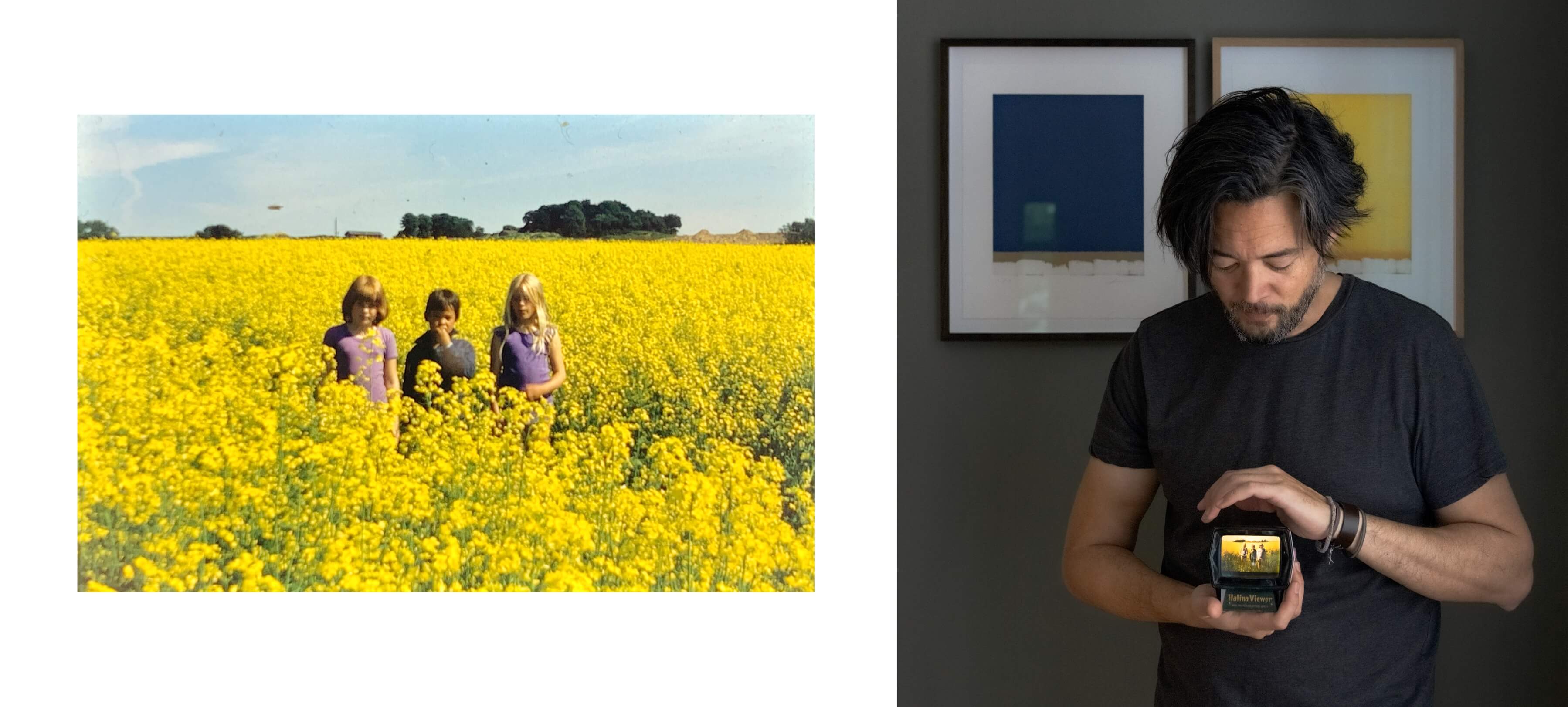
Looking at childhood photographs, I see my bicultural background. My father teaching me to ride a bike. My mother dressed in Korean silk. Two different flags. Two different kinds of imagery on the walls. I made a series of prints using colours from my childhood. I was curious to find out if colour does the same as sound, especially music, smell, and taste, and activates memories from our past.
Some of these memories are linked to my Korean roots, or, in my case, my culturally mixed roots. My work will always be a mix. I am not exactly a Korean artist, nor am I fully a Danish one. I see this as an incentive for me to explore an area in between.


Have you observed any interest or reception toward Korean art in your city?
There are real benefits in being engaged with art of any culture. I have a personal interest in connecting with Korean art, and I would be delighted to see an interest in Korean art flourish in Copenhagen.
If you had to describe Copenhagen as a creative “material,” what would it be and why?
Copenhagen means “Merchant’s Port,” and although you could argue that Copenhagen is anything but the water, I think the creative material that makes this city come to life is water. I carry a sketchbook, a tin box with pigments, a small paintbrush, and water with me into the city for sketching.


Where in the city do you go when you need to recharge creatively?
I actually recharge creatively at home. There’s a big kitchen in our apartment. Here I write essays, make larger drawings, and drink coffee from ceramic cups made by my girlfriend. I recharge by cooking for friends and family, sharing healthy food and heartfelt conversations around our kitchen table. I mix paints at one end of our living room and make paintings at the other. In the middle of the room, there is a giant, beautiful bookcase filled with books for all kinds of armchair traveling.


If a Korean artist were to visit Copenhagen for a month, what would you recommend they do, see, or experience?
I would recommend visiting artists write me an email so I can invite them to dine with us. I would ask about their work and learn about their interests. Then I would draw a detailed map with notes about places to go based on our conversation.
What are you currently working on?
For a while now, I have been working on transforming my website into an archive of sorts. In the beginning, my ambition was to make an online catalogue raisonné. But now it feels more like cleaning up an attic. If I end up with a bric-à-brac-isonné, that’s perfectly fine.
How do you imagine your relationship with Copenhagen evolving over time?
In 2026, I will have been living and working in this city for exactly twenty-five years. I am sure that there are many hidden gems still to be found. I sincerely hope that the heart of the city will continue to be just as inhabitable as it is now. I very much look forward to finding out exactly how my relationship with Copenhagen will evolve. I have a strong feeling there is a beautiful road ahead of us.