k-art in berlin
Let Hyeyoung Kim’s painterly stains do the talking.
When Hyeyoung Kim arrived in Berlin in January 2008, winter had settled heavily over the streets. It was cold, dark, and subdued, projecting a certain melancholy that paralleled her introspective playlist tones of Miles Davis and Chet Baker.
Beneath this muted surface, however, Berlin inhabited a remarkable depth. Time there did not feel compressed or optimized; it simply stretched, accumulated, and lingered in the understated nooks of daily life. Soon, the city’s aesthetic, visible in narrow alleys, tranquil parks, and former factories transformed into art studios, began to seep into Hyeyoung’s work. Previously trained in portraiture and narrative painting, her practice shifted toward acrylic and oil paint on canvas. Rather than capture moments, oil offered a vehicle with which to build surfaces gradually, allow time to settle in layers, and hold multiple temporalities within a single image.
Further afield, a turning point took place during Hyeyoung’s group residency in 2015 with peers from the Berlin University of the Arts (UdK). Passing through Venice and onward to Greece, she arrived at a remote mountain site under physically demanding conditions. The residency coincided with the Greek economic crisis, and the apparent human strain and natural beauty prompted reflections of memories and heydays gone by.
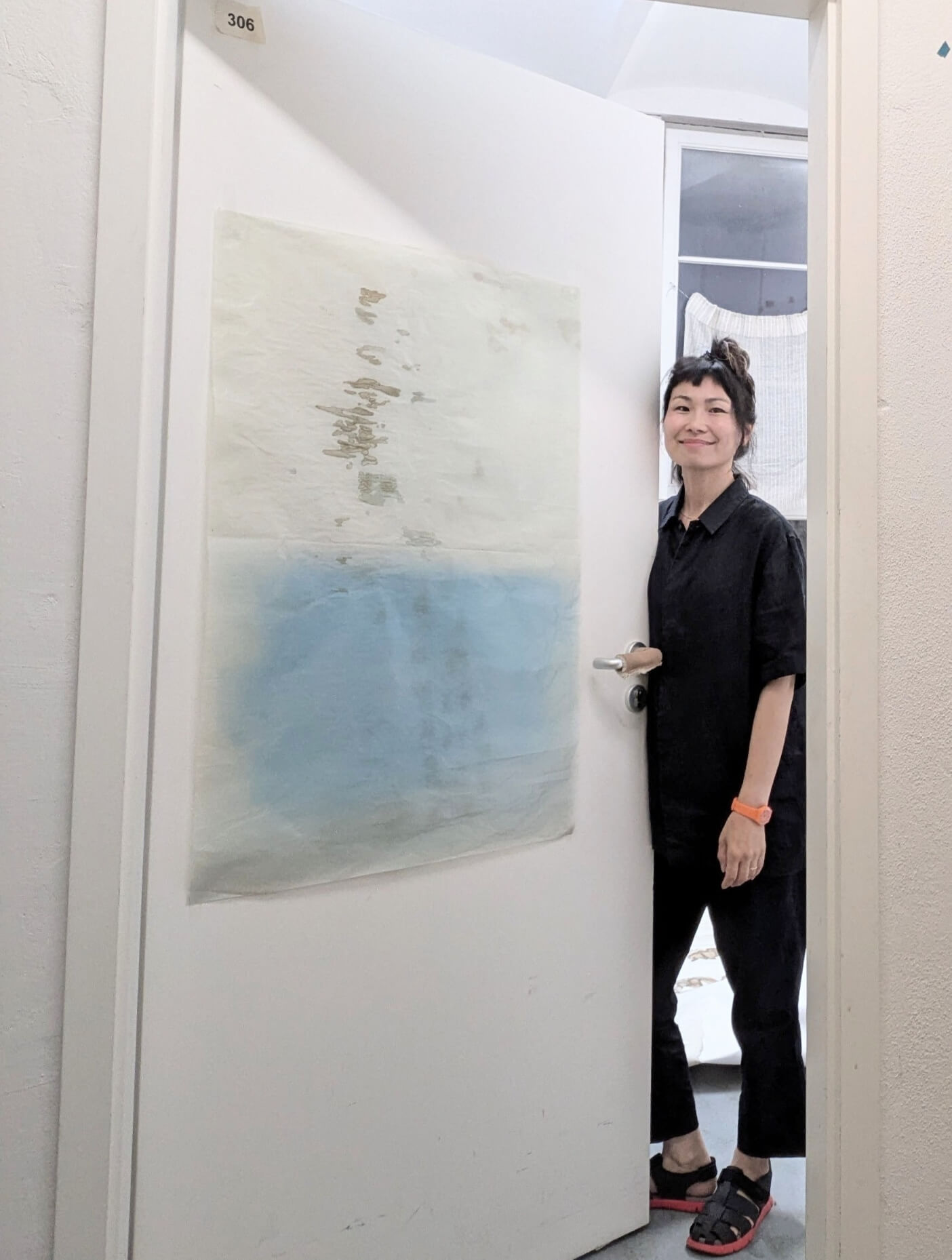
During the residency, she worked outdoors, unrolling large sheets of paper and encouraging the landscape to leave its mark. Upon returning to Berlin, the works created continued to change as insects attached themselves to the paper and died, materials decayed, and surfaces deteriorated. Having internalized these transformations as part of the work itself, Hyeyoung exhibited them at the Japanese Cultural Institute in Berlin, symbolizing an expansion beyond two-dimensional limits and into a dynamic field that honored the essence of that which remains.
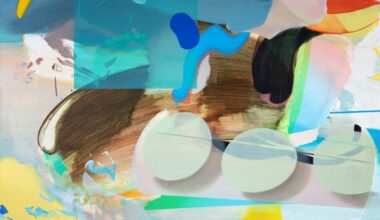
Earlier series such as Airfield (2010-2015) and Youth Turned into Statues (2015-2017) already hinted at such concerns. In them, Hyeyoung explored the tensions between movement, stillness, possibility, and stagnation, conveying the psychological atmosphere of Berlin as imbibed from the perspective of a transnational migrant oscillating between cultures.
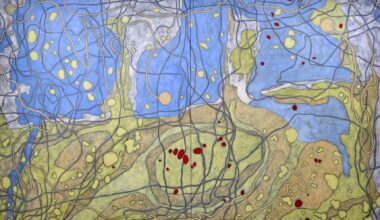
At the onset of the pandemic, Hyeyoung relinquished control and started working with experimental processes such as stains left by tea and coffee on paper. These ephemeral marks, formed through ordinary routines and unexpected accidents, became records of passing time. They made Hyeyoung more receptive to the winds of uncertainty, compelling her to preserve a sense of irregularity in her work. Ever since, she has layered lines, spatial gestures, and painted figures, their blurred outlines transitioning as if to echo the fragile plight of marginalized individuals in the midst of unrelenting social change.