k-art portal
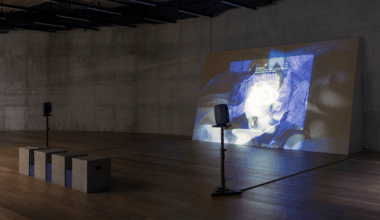
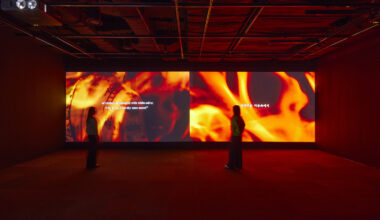
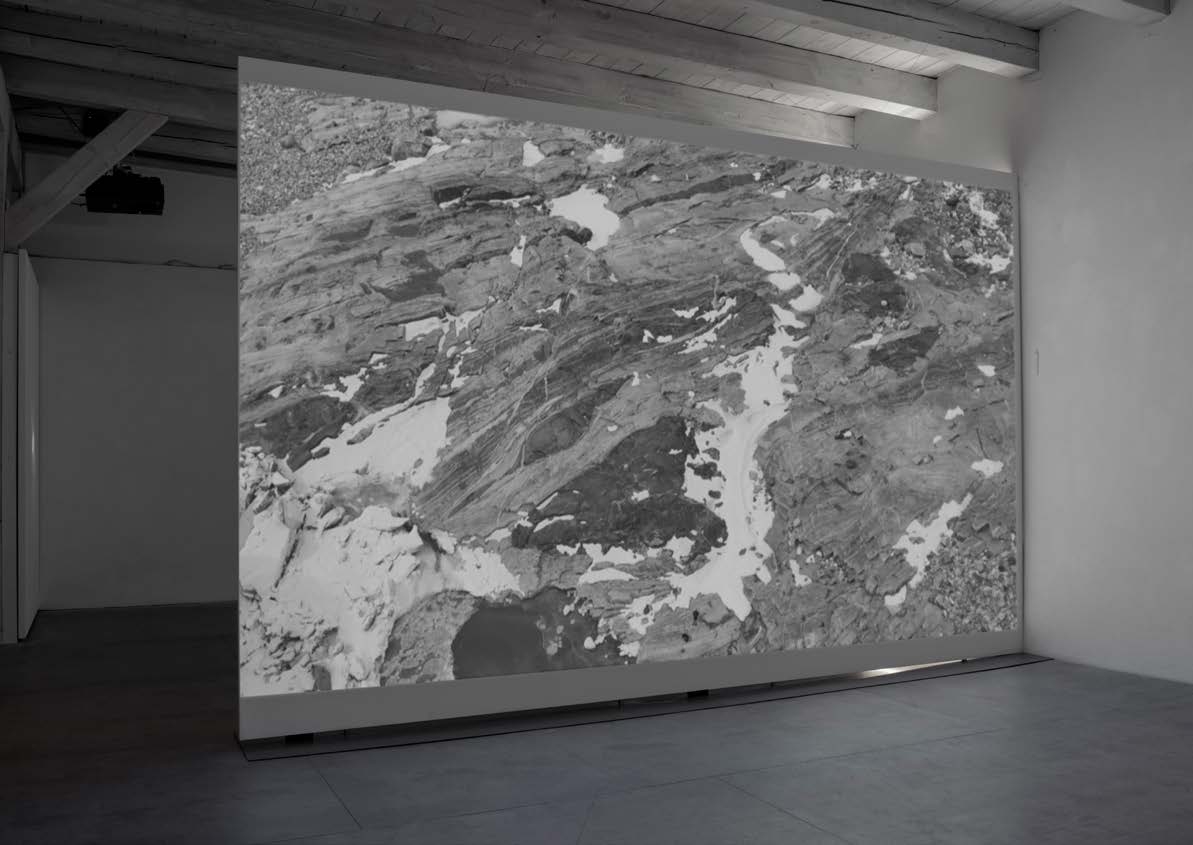
At first glance, the vast white expanse of Greenlandic ice appears silent, empty, and so geographically remote that it feels detached from the urgencies of everyday life. In contrast, SueJin Hong’s Circuit (2025) project, consisting of two single-channel videos, a two-channel video, sound installation, and printed piece, reflects upon the enduring structures, ambitions, and secrets embedded within this frozen frontier. Together, they traverse the intersection of intertemporal themes such as environmental change, Cold War militarization, family memory, and the uneasy promise of neutrality in uncertain times.
Beneath Greenland’s ice sheet lies the remains of Camp Century. Presented by the U.S. as a research station in the 1960s, it formed part of Project Iceworm, a covert plan to store nuclear weapons under the ice and transform the Arctic into a potential launch site. Though eventually abandoned, infrastructure and radioactive waste remain entombed in the glacier, displacing Inuit communities and fundamentally politicizing the terrain.
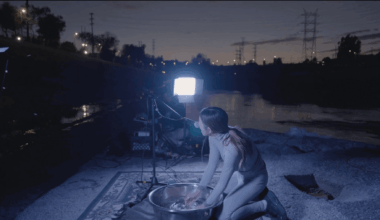
Through Circuit, SueJin listens intently to these historical traces. Working with glaciologists in Switzerland and Copenhagen, including Professor Willian Colgan, she immersed herself in the ecological and geological realities of the Arctic. With scientific data as a starting point, she employed geophones and field recorders to capture the subtle sounds beneath the ice: the low grind of movement, the crack of pressure releasing, and water tunneling through frozen corridors. Some recordings were made on site, while others were reconstructed through data and memory. At times, SueJin extends the sounds digitally to the point of intimacy, as if the glacier itself were breathing beside you. Further layered with voice and sea, the soundtrack amplifies glacial shifts, accumulations, and erosion, as well as the remnants of military ambition held within its mass.
SueJin’s visual language echoes this tension. Drone footage hovers at a distance, tracing slow arcs over the ice from a height that feels decidedly indifferent. Conversely, 3D simulations render small, incremental changes in the glacier’s surface. In the absence of drama, the emphasis is placed on elusive transformation, on the way human and natural systems entangle out of view in a way that continues to shape the present. Suddenly, we as viewers are privy to military strategy as it alters geography, climate change as it exposes buried histories, and political machinations as they reverberate through ecosystems. The circuit loops, but it refuses to resolve.
From Greenland, SueJin explores the legacy of the Korean War and its imprint on her own familial dynamics. While part of her family once resided in North Korea, their story faded into obscurity after her grandfather’s passing. That absence became yet another frozen territory, rarely addressed, effectively tabooed, and approachable only through the medium of art.
With a deep regard for place and the positionality of the exhibition space in Switzerland, SueJin also draws upon her studies at Zurich University of the Arts (ZHdK), which took place during the COVID pandemic and the outbreak of war in Ukraine. Watching violence through high-resolution screens while sitting in enforced stillness sharpened her sensitivity to distance. Indeed, rather than guaranteeing understanding, the ease of access to images often results in an unsettling sense of numbness. In response, she forges a connection between the Arctic ice and the Swiss-led peacekeeping forces present in the Korean Demilitarized Zone (DMZ), highlighting how perceived remoteness is marred by militarization and division, how silence is charged, and how the ideological forces of visibility, neutrality, and erasure normalize themselves into the fabric of the land.
What makes the project compelling is its refusal to simplify. It does not present victims or villains, nature as pure or corrupted, neutrality as good or bad. Instead, it compels us to engage more intimately with the glacier, to consider whether melting ice might reveal more than geological change, and to question what it means to inherit circuits that will ultimately determine the future of our world.