k-art in london
Let Shinhye You’s clay empower when words cannot.
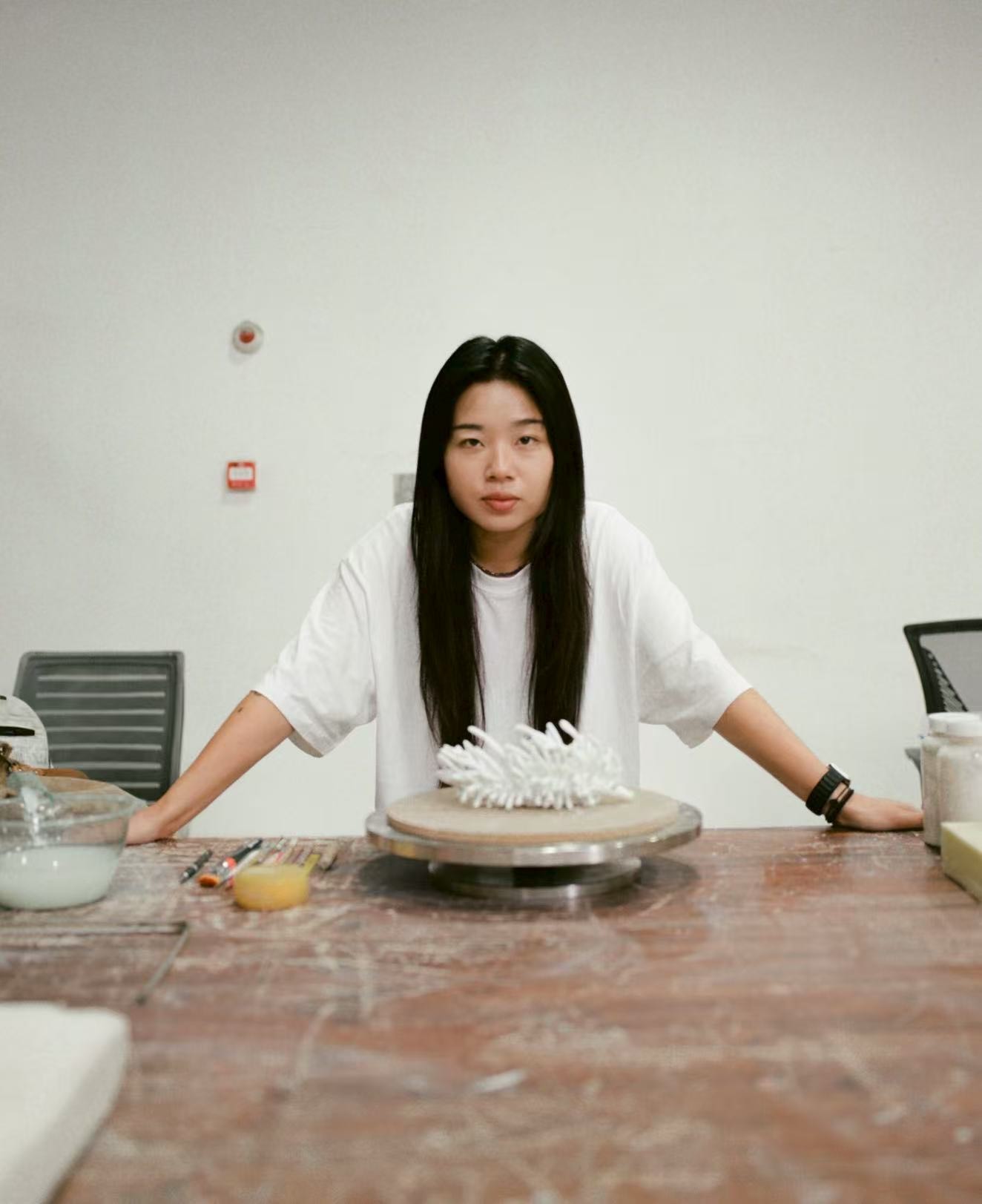
Shinhye You grew up listening to Britpop, often wondering why and how UK bands made such gloomy yet beautiful music. Intrigued, she came to London for a master’s degree at the Royal College of Art (RCA), intent on viewing the creative fields through a wider angle lens.
In the first few years, Shinhye’s eyes remained wired shut. Overwhelmed and in panic mode, she fixated on a need to survive and prove herself as an artist in a foreign land. Back then, harvesting accolades for her resume was the primary goal. In hindsight, she scrutinizes the anxiety that permeated her early works and wonders why she felt the need to be so incredibly hard on herself.
Receiving an artist visa this March was a landmark moment for Shinye, providing the sense of security needed to muse upon the kind of lifestyle she truly wanted. Suddenly, she realized that pints of beers in local pubs with peers and numerous rejections from open calls were in fact essential facets of the coming-of-age experience. She now searches for something simpler, honest, and more transparent, focusing instead on the subtle yet incomparable joys of being a ceramic artist.
Shinhye births delicate and detailed creatures out of stoneware and porcelain, many of which reside in a fictional universe of her own creation. This universe was inspired by a childhood love of science fiction and fantasy texts, the ones that usher readers through portals into alternative realms where new possibilities abound. It also draws upon her RCA dissertation, a magical realism piece that ultimately spawned a body of creative short stories.
In London, many people have expressed an interest in the stories Shinhye has to tell. As a creative, she wants others to hold her words and works dearly, “like cupping a little bird in their hands.”
In one of Shinhye’s short stories, Śarīra crystalized stones, often found in the cremated bodies of monks, take center stage. In a world where everyone leaves a stone behind in passing, they are collected by family and friends as if they were the physical bodies of the beloved. Akin to Shinhye’s fiction, her creatures reinforce the porous, membrane-esque nature of existence, resistant on the one hand, yet liable to rip and escape into death at the same time. Her sculptures manifest as preserved corpses of lives once lived, residing in a dimension where magic still exists untouched by the forces of human oppression.
On one occasion, Shinye recalls holding a show at a London chapel. On the way to the venue, she observed a tranquil, graveyard-lined road. While some headstones were gleaming white, others were clad in moss with once heartfelt inscriptions weathered over time. Seemingly forgotten, they mirrored Shinhye’s younger self often overshadowed under the weight of long-standing patriarchal norms. This was the perfect setting to showcase her creatures, whose mutilated forms evoke empathy for the marginalized ones, while epitomizing how injustices untapped can sweep away the beauty in our world, never to return.