k-art in Munich
Reinvent the geometry of the room with Youngjun Lee.
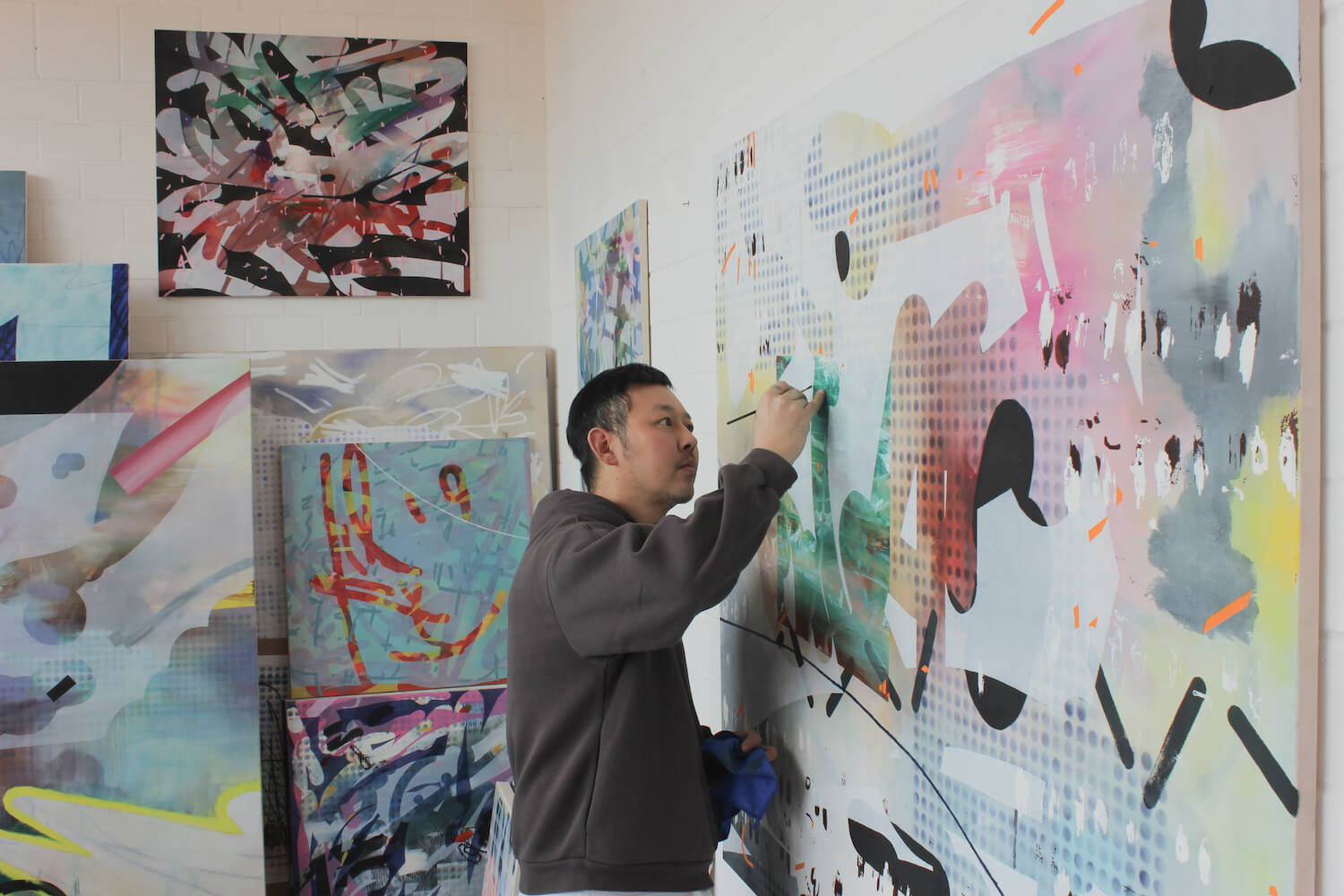
Munich taught Youngjun Lee what it means to develop ideas patiently rather than chase immediate results. Moving between Seoul and Munich, he noticed how temporal perception changes depending on where our bodies are placed. His works mimic this transnational existence. They emerge via a build up of lines, color fields, gestures, and sudden, corrective erasures, developing through rotation and from multiple orientations.
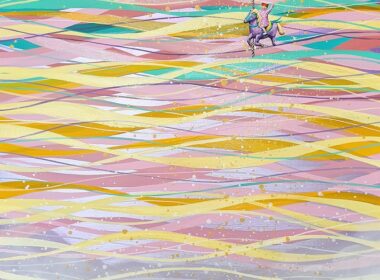
His Notation Series translates human agency and sensory perception into a system of visual structures. Grids, transparent washes, overpainted passages, and fragmented forms act independently on canvas while harmonizing into a larger, compositional whole. In a pair of solo exhibitions in 2024, certain pieces coaxed audiences inward with intense psychological depth, while others compelled viewers to transcend the picture plane altogether. Designed as conceptual twins moving in opposite directions, both addressed the burning question of how painterly space is formed when the boundaries of the canvas are broken.
In his Seoul-based show, Ingoing Escape, Youngjun inverted the typical definition of flight by drawing perception into the receding, vertical reaches of the image. In September of that same year, he mounted the counterpart exhibition, Outgoing Invasion, at Munich’s Super+Centercourt. Here, rather than allowing enemy forces to enter the frame, he forced the painting to expand outward. He also accentuated the importance of space, taking into account the distance between individual works, the physical movement of spectators, and the natural rhythms of the gallery walls.
Developing upon this, his Notation / Fugue Series borrows from the classical musical form in which a solo voice is layered by other voices to create an intricate texture known as polyphony. These works remind us that we are, each of us, a fugue; a collection of overlapping stories, recurring memories, and sudden variations, forever becoming, and constantly acted upon by the hands of time.