k-art in Munich
Join Jonghoon Im as he floods his canvas with ink, cuts through the chaos, and scrubs it raw.
The Academy of Fine Arts in Munich requires applicants to arrive in person and present portfolios to prospective professors. For Jonghoon Im, this enduring tradition offered an intimacy capable of melting away the anxieties of translation. Even the Munich locals spoke with a gentle, intuitive clarity that offset his broken German and so often cleared the air. Korea may have raised him, but it was in this accommodating space that Jonghoon’s creative practice was born.
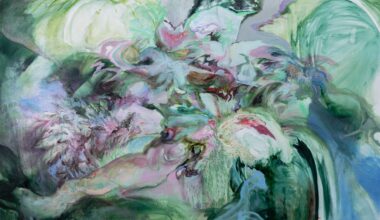
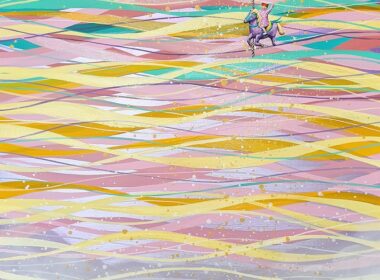
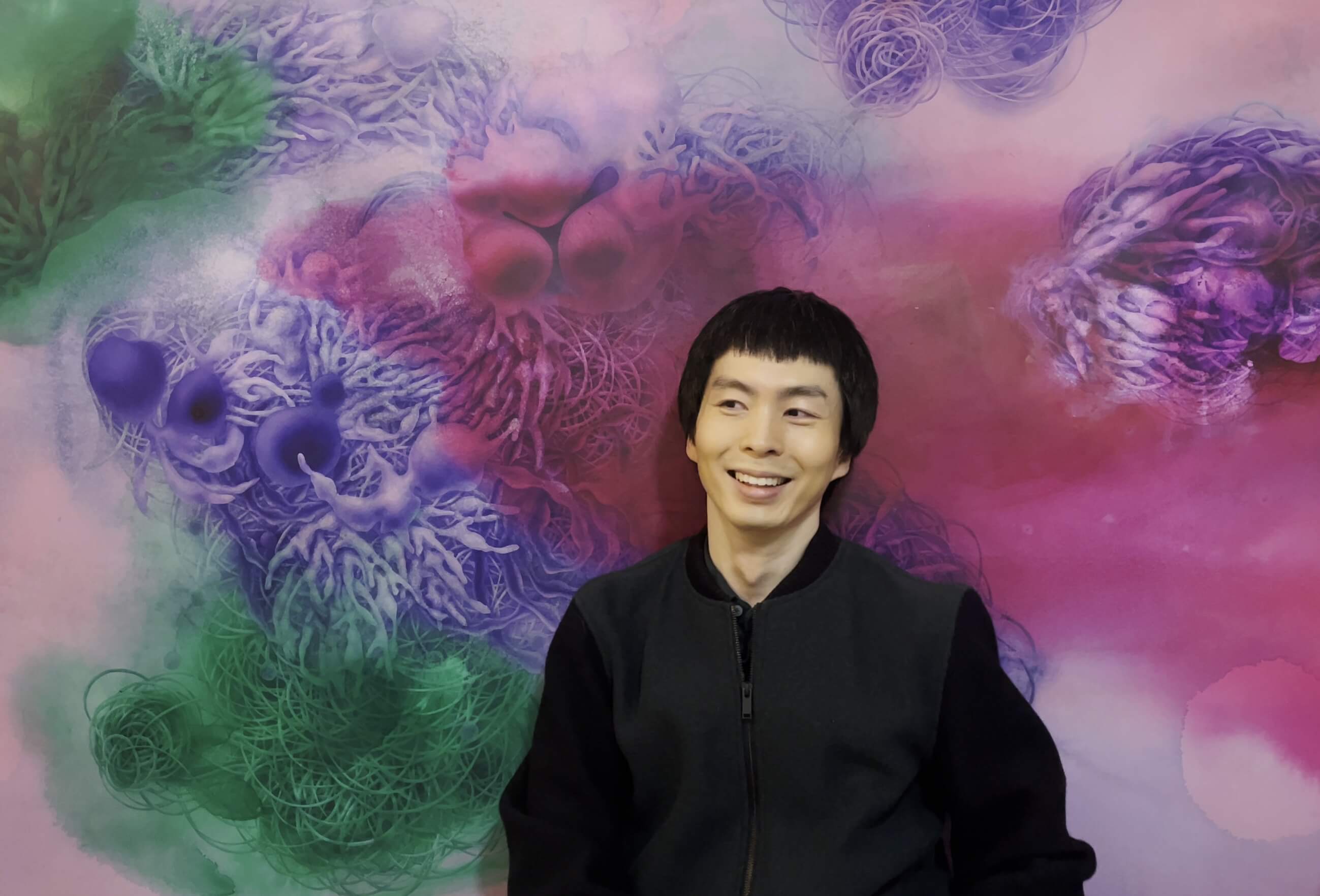
Jonghoon’s new projects begin with the pouring of acrylic ink across wet surfaces. The ink spreads in unpredictable, wandering configurations, directed by the weight of the pigment, the humidity of the air, and even the slight unevenness of his studio floorboards. Once dry, he slices through the surface chaos with masking tape to define the structure of the image. Then, he takes abrasive tools to rub down the composition and splashes paint anew. Layer upon layer, across multiple cycles of construction and dissolution, the work accumulates time until a delicate truce between impulse and restraint is achieved. Recently, by scanning and expanding these completed pieces into digital animations, fixed narratives start to exhale, carrying their fluid materiality into the public realm.
In 2017, an academy selection led to an exhibition at the Pinakothek and even a surprise artwork acquisition by the Staatliche Graphische Sammlung München. Then, following a five-year tenure at Domagkatelier, Jonghoon pushed his career forward via scholarships and rigor. Every so often, he returned to Korea to sleep deeply, relax with old friends, and allow the tension to uncoil. These stints created distance and facilitated clarity of mind, enabling ideas to mature in the dark and evolve once more upon his return to Munich.
It was the pandemic that inspired Jonghoon’s most definitive body of work, the Hybrid Series. At the time, oppressive studio commutes piled on the pressure. To ease the strain, he collapsed his scale and operated exclusively from a tiny workstation at his home. The new setup granted him the grace to experiment on another level. Each work took longer to complete, but they also achieved a newfound depth that resonated with this era of enclosure. The series proved that when our external worlds are restricted, the canvases we create must become deep enough to contain the full volume of our interior lives.