k-Studio sessions
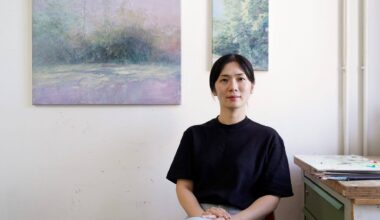
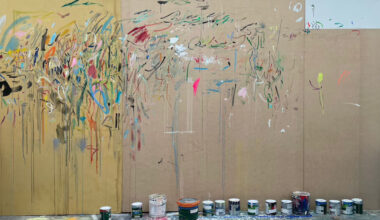
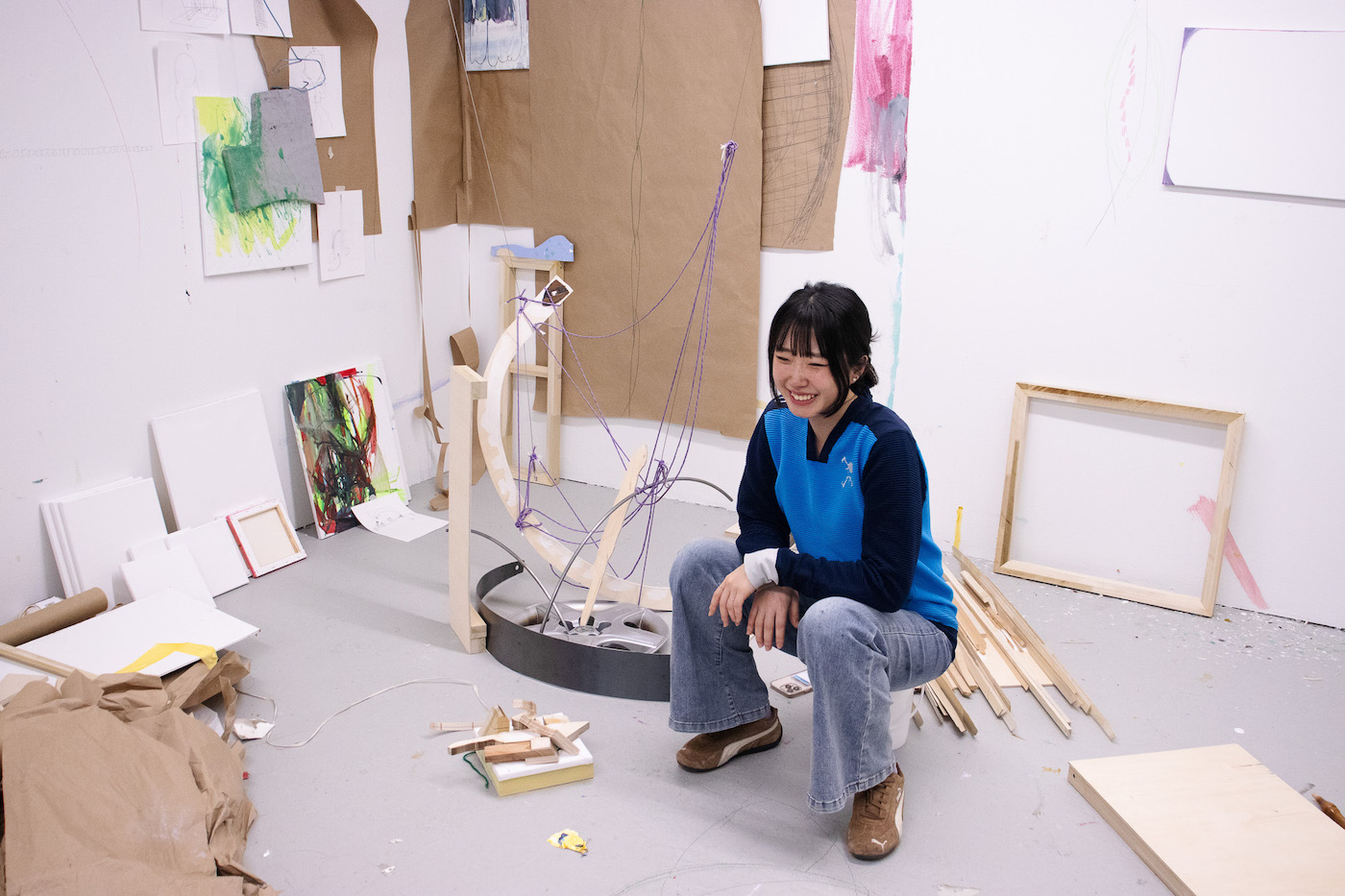
Entering Jooeun Kim’s Chicago studio, one immediately experiences the noisy, impending infrastructure of a fracture. Though her works present moments of stillness and calculated structural tension, the room that birthed them remains a playing field of chaos. Heavy hardware, metal casting artifacts, and stripped copper wires crowd the perimeter, cohabiting with an array of items scavenged from the surrounding streets.
There are no pristine pedestals here. Instead, the space functions as an ongoing, creative jostle with gravity, sound, and material performance. It is a studio dedicated to the art of un-making, a physical process where forms are systematically dismantled and pushed to their absolute spatial limits.
This obsession with instability is bound to the very geography that Jooeun traverses. Chicago greets her with a diverse peer network, yet it simultaneously amplifies the sharp, emotional displacement of being an outsider, a creator who is never fully rooted in a single soil. To contend with this fluid sense of identity, she turns to the bones of the city.
The harsh industrial energy and rigid architectural grid of Chicago provide Jooeun with an endless supply of structural lines, vectors, and more. During her commute, her eyes drift to the edges of the pavement, spotting abandoned tires, crumpled plastic signs, and rusted wire leaning precariously against alleyway walls. She rescues these urban fragments, bringing them into her workspace to extend their survival into permanent sculptural and sonic installations.
Jooeun rarely approaches a blank space with preconceived sketches or blueprints in mind. Her process is intuitive and intensely physical. Upon arriving, she establishes a strict limit on her time but leaves her routine open to interpretation, responding spontaneously to her immediate sensory state. She grabs the earphones and sets a single song to play on an infinite loop. This repetitive auditory shield isolates her mind, allowing her to block out distractions and submerge in her research.
She tinkers with the weight of her materials, letting ideas pour out raw. The official work commences the exact second she notices a point of precarious balance, a specific threshold where a massive, unyielding sheet of steel rests against a splinter of fragile wood. She isolates that line of directional force and lets the experimentation take over.
For Jooeun, the studio is merely the site of physical muscle and material confrontation. When the session ends and she exits the building, the tactile execution stops, but the labor does not. As she walks away, she reconstructs the objects in her mind, weaving thought branches together, arguing against her own logic, and raising structural concerns anew.
The world beyond those walls is where the true warm-up happens. Traveling, studying, and meeting friends are all gathered inward, digested, and eventually embodied in material forms. Jooeun cannot stop time, but she can always find ways to stand exactly at the point where the world around threatens to topple over. This constant circulation ensures that when she returns to the studio the next day, she is never really entering an empty room. She returns with a body reinforced by Chicago’s urban gusts, and a mind ready to begin the un-making all over again.