k-Studio sessions
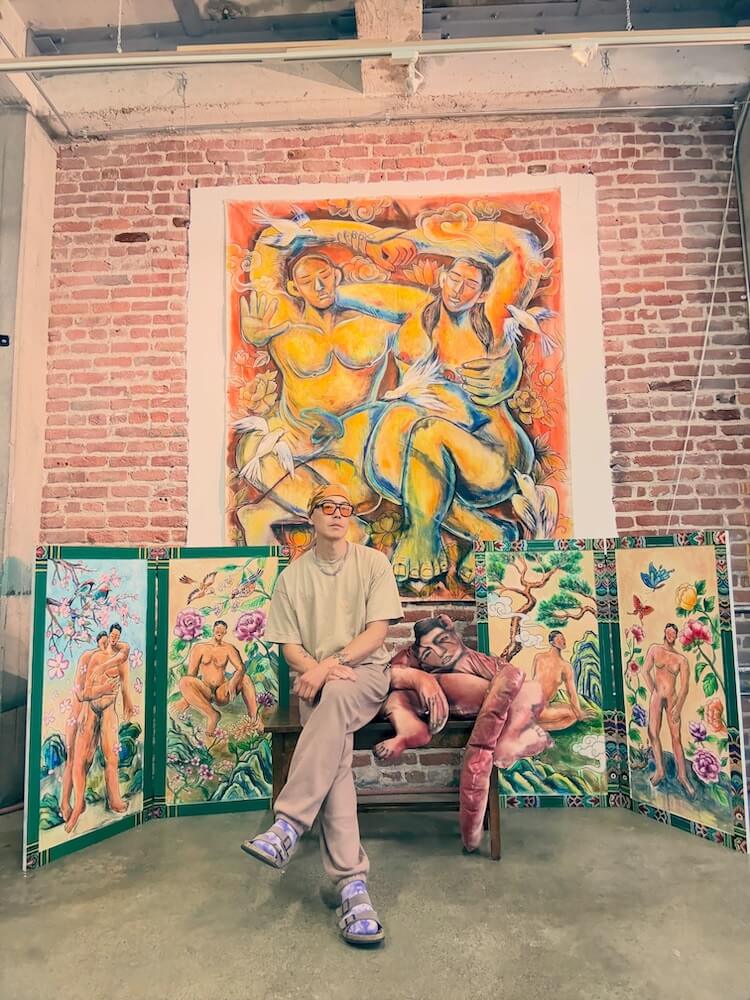
When you interact with one of Jun Yang’s finished pieces, you bear witness to a moment of pure, unadulterated confidence. These works appear certain, polished, and even whole again. If you enter his workspace, however, that bubble spontaneously bursts into something much more human, vulnerable, and real.
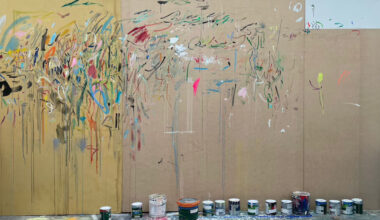
Jun’s studio is a map of his mind. It is a tiny, chaotic room crammed with the emotional baggage of everyday life. Here, unfinished thoughts, failed experiments, old paintings, and raw ideas fight for space. For some, the lack of organization may feel overwhelming. Fabrics are scattered across the floor, sewing kits sit open, ceramic pieces perch on shelves near enormous paper rolls of drawings, and unprimed canvases lean against softer forms.
As a multidisciplinary artist, Jun rarely ever locks himself into a single lane. Amidst his mess, a single face or portrait is simultaneously translated into a ceramic vessel, an oil painting, or a textile sculpture. It is an unashamedly open-ended, interconnected way of figuring out who we really are.
Living and creating with ADHD means Jun’s relationship with art follows a very specific, intense beat. The beginning of any project feels like falling in love anew: it is an absolute rush, fueled by imagination and boundless potential.
But staying until the end and going toe-to-toe with his own stubborn resistance? That requires a completely different kind of stamina.
Things get all the more exhausting when dealing with large-scale pieces that mature over years, claiming nooks while refusing to feel finished. On some days, Jun paints in a flow state for hours. On others, he simply cleans the space, paces, or sits quietly observing the walls.
The work takes so much out of Jun that the studio follows him into the streets and home again. As much as he leaves carrying the pride of breaking through walls, he also endures the stress of doubt, knowing full well that the same unresolved puzzle is waiting for him tomorrow.
The mental fatigue of Jun’s practice is matched only by its physical toll. Working on site-specific murals and lofty canvases inside a restrictive unit boxes him into a daily game of real-life Tetris. To make even a few inches of leg-room, he has to lift, rotate, and stack hefty frames. When his back and shoulders ache from the strain, his life beyond the studio becomes a matter of preservation. He treats his body like the essential tool and temple it is. He commits to the gym, stretching and eating well just to repair the damage done on the studio floor. He heads to local cafes with a notebook to flesh out his next strategic moves away from the claustrophobia of the canvas. He walks through nature or wanders museum halls to flush out his eyes and counter creative blocks.
Above all, Jun’s most important survival mechanism is his community. When he feels trapped inside his own head, he shares progress photos with a small circle of trusted friends. Their sharp, unfiltered critiques act as a lifeline, pulling him out of his isolation. Surrounded by significant others and safe spaces, Jun finds the care and clarity he needs to walk back through the studio door the next morning, ready and eager to embrace the beautiful chaos all over again.