k-art portal
styx symphony
For Yuri An, poetry is a powerful muse. In the early days, she was struck by the flagrant gendering of women poets, and the cultural narratives of domesticity, privacy, and emotional confinement that framed their works. Through the poet Goh Jung Hee, however, Yuri came to appreciate the strength of women’s language, writing, and poetic expression. Over time, she opened portals to alternative linguistic and imaginative possibilities, gravitating towards the peripheral beings and subaltern voices whose histories have been marginalized by patriarchal oppression.
Since 2016, through the Korean Diaspora project, Yuri has explored how lives and identities are shaped and transformed by power structures, particularly in contexts where the state and collective forces meddle in the jurisdiction of personal trajectories. Her earlier works focused on sites marked by borders and division, as well as specific subjects such as ethnic Koreans in China and North Korean refugees. In contrast, Styx Symphony addresses instances of war and violence in the twentieth century, foregrounding the enduring scars of individuals and communities, and the many remarkable voices that emerge amidst these turbulent times.


Yuri started by reading poems she had long admired while immersing herself in newly discovered works. She sketched with text, brainstorming words and sentences before reading them aloud to elicit the natural flow of images that served as early points of departure. She eventually settled upon Sadako Kurihara, Wislawa Szymborska, Maya Angelou, and the aforementioned Goh Jung Hee, four women poets and survivors who expressed and testified to historical traumas with incredible care. For Yuri, the act of translating poetic language into audio and visual elements was a means of reframing acts of atrocity, oppressive regimes, and civil rights movements through a contemporary, human-centric lens.
Yuri positions these poets as the eponymous Styx, a goddess and river from Greek mythology that borders the Earth and the underworld. In this sense, the Styx manifests as an expression of beings who disappeared like smoke, without names or traces in history. Like an invocation of the spirits, these voices utter words of consolation and solidarity, resisting the pervasive realities of hatred, discrimination, and violence, and asking us, as viewers and global citizens, to question with whom, and through what forms of relation, can we live together in this world.
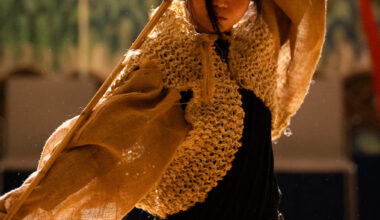
During the project, careful consideration was given to selecting the voices of the reciters. With each of the four movements presented in a different language, emphasis was placed on voices that resonated deeply with the historical contexts of the poems in question. The first movement, the Hiroshima section, features a third-generation Zainichi artist, who, as an ethnic Korean living in Japan, grappled with the ethics and postcolonial merits of project participation throughout. The second movement, the Warsaw section, is performed by a Polish international politics student living in Korea, and the third movement, the Selma section, involves a bilingual speaker whose transnational mobility positions her as a cultural hybrid and in-betweener. The fourth movement, the Gwangju section, presents a moving collaboration of peers with whom Yuri co-organized the 10th anniversary memorial for poet Goh Jung Hee over twenty years ago. Across different contexts, each of these contemporary women encountered the words left by the poets, contributing their own experiences of pain and resilience, and transforming the poems into a shared, inter-generational journey of remembrance and response.
At its core, Styx Symphony tackles a crisis of representation in the field of visual art, where the alignment of concept, subject, and material oftentimes grounds individuals into fossilized remnants of a closed past. Yuri employs creative license to scrutinize the perspective and positionality from which she views and interprets the lived experiences before her. She resists the urge to essentialize, liberating space for sustained engagement, critical self-reflection, and negotiation.


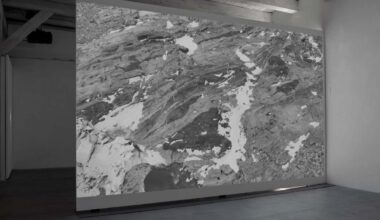
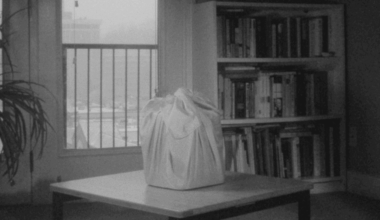
The exhibition screening of Styx Symphony was an experiential, synesthetic affair. It also coincided with the Russian invasion of Ukraine, with one visitor, who introduced herself as Koryo-saram (ethnic Koreans residing in the former Soviet Union), remarking that the work felt as if it were somehow bearing witness to current events. This sentiment best highlights the temporal continuity and touching nature of Styx Symphony, where the past becomes an active point of connection with our present condition, and a moral compass with which to guide and reimagine the way.
Styx Symphony was produced after Yuri was selected as a participating artist for ArtSpectrum2022 (Leeum Museum of Art, Seoul).
For inquiries regarding the full version of the work, please contact: yurian0824@gmail.com