featured artists
urban renaissance
Tear it up, rebuild, and begin again with Hongbin Kim.
Some years back, Hongbin Kim’s emotions, surfaces, and artistic shifts fell into a creative status quo, inspiring him to expand his spectrum and introduce new stimuli into the stillness of his practice.
He soon relocated to NYC, a rough yet remarkably honest city where freedom and chaos coexist. Surrounded by diversity’s buzz, he voraciously dismantled and reorganized his entire sense of self. While the incessant energy and tension of daily life felt overwhelming at times, it also materialized turning points that defined Hongbin’s Renaissance and made him feel vividly alive.
Public art is integrated into the natural flow of NYC’s cityscape. Here, locals rarely notice Hongbin as he transports heavy materials and oversized artworks on the subway. When he photographs for archival references on bustling sidewalks, people slip quietly behind him and on occasion, even pose playfully for the camera. Instead of obstructing Hongbin’s creative process with judgment, they respond with praise, curiosity, and words of encouragement, motivating him to express his inner world experimentally with a newfound fearlessness.
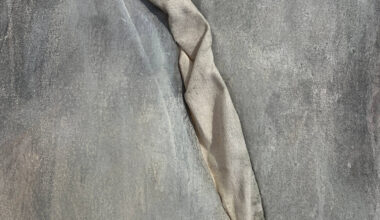
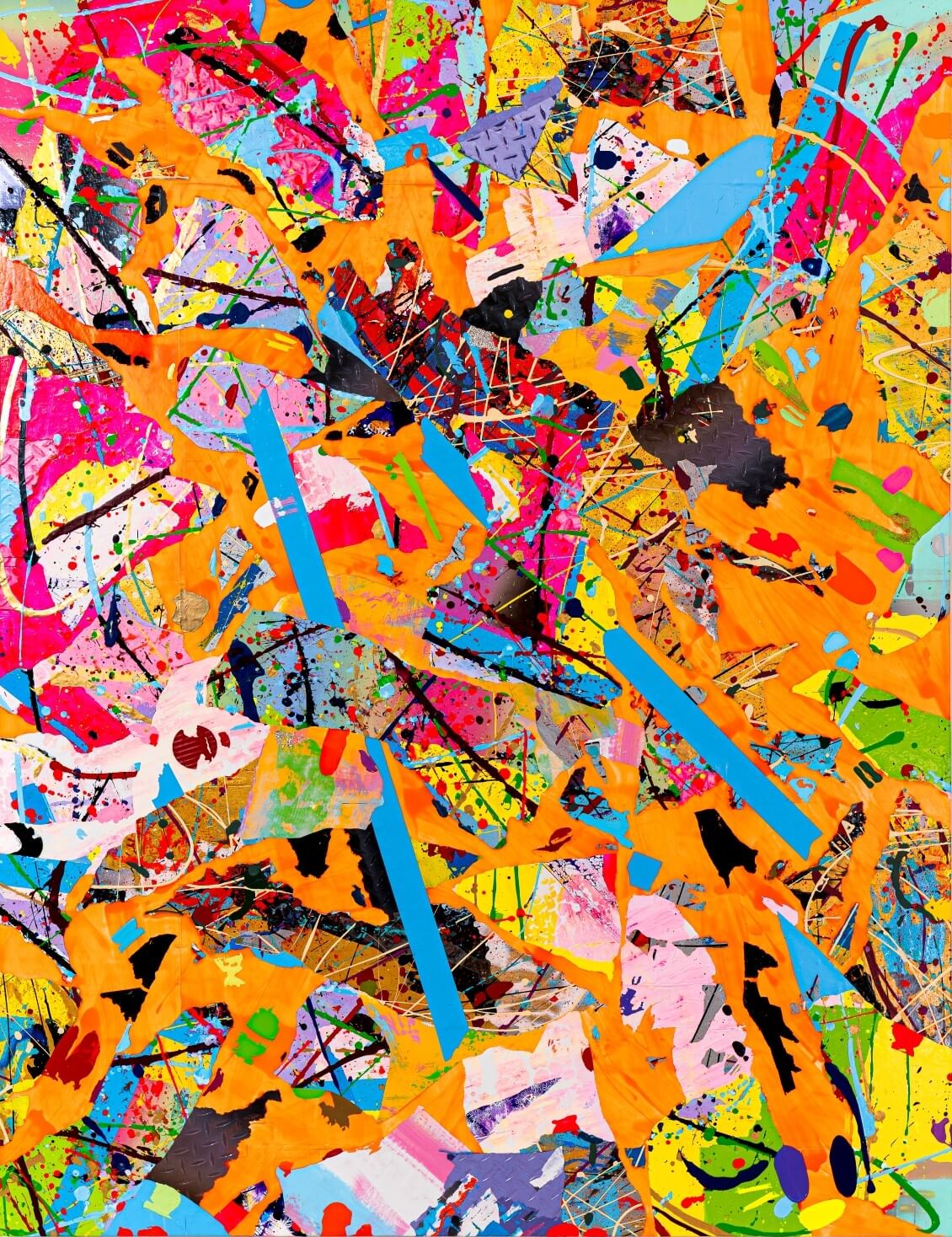
NYC is a place where new velocities and textures sublimate themselves into the city’s surface each day, creating a hybrid blend of sensations palpable to those on the ground. Through his Urban Palimpsest series, Hongbin translates street-level impressions of walls, cracks, and accumulated marks into new painterly configurations. Like the eponymous palimpsest, he sets in motion an ongoing cycle of deconstruction and reassembly, applying acrylic paint to film and letting it dry before tearing, peeling, and collaging the fragments into a visual record of time, memory, and personal growth.
Hongbin is influenced by the architectural dimensions of Middletown and the unique spatial character of areas on the verge of redevelopment. Before the former bank was converted into an arts and cultural complex, he had a chance to work inside the structure in collaboration with the Chase Project. Completing work on-site and later exhibiting it at Gallery Chang in Manhattan created a bridge between two very different urban environments, manifesting as an exploration of how painting can exist within the course of an active and ever-evolving city.
Hongbin’s latest solo show at ACC Gallery in New Jersey brought together themes of shifting identity and fragments of transnational emotion into a single narrative structure. Above all, it epitomized how NYC’s unparalleled pace, surface density, and sense of possibility had transformed his visual language, expanding the structure, substance, and impact of his works.