k-art in seattle
an interview with mooa kang
What first brought you to Seattle, and what were your first impressions of the city?
After completing my master’s degree in interior architecture at the Rhode Island School of Design (RISD), I moved to Seattle to accept a designer position at NBBJ, a global interior architecture firm. At that time, I lived between two rhythms, working as a designer during the day while continuing my art practice at night.
My first memory of Seattle is not just a place but a color, emerald green. Known as the Emerald City, Seattle’s dense forests, misty air, and the way nature is woven into everyday life became a profound source of inspiration, subtly yet deeply shaping the palette and sensibility of my work.


How would you describe the creative energy or art scene in Seattle?
What I appreciate most about Seattle’s art scene is how deeply it is rooted in local communities and how accessible creative opportunities feel. On the first Thursday of each month, Art Walks take place across neighborhoods such as Belltown and Pioneer Square, where local artists openly present their work and engage directly with audiences.
When I first arrived in Seattle, I had no connections, so I actively participated in these art walks, visiting galleries, meeting artists, and gradually finding my way into the city’s art community. Showing my work at Slip Gallery and B612 Gallery became a turning point, marking the true beginning of my artistic life in Seattle.


What is one moment, project, or exhibition in the city that you will never forget?
One of the most unforgettable moments was my solo exhibition titled Table of Thoughts, held in Ballard. It was the first time I encountered such a diverse range of audiences in the United States. Through these interactions, I came to realize that art functions as a universal language that transcends age, culture, and language.
Many visitors discovered elements of Korean aesthetics through my work, and witnessing that moment of recognition was meaningful to me. The exhibition reshaped my understanding of what it means to be an artist who builds community and opens spaces for dialogue through art.


In what ways do your Korean roots continue to shape your work while living abroad?
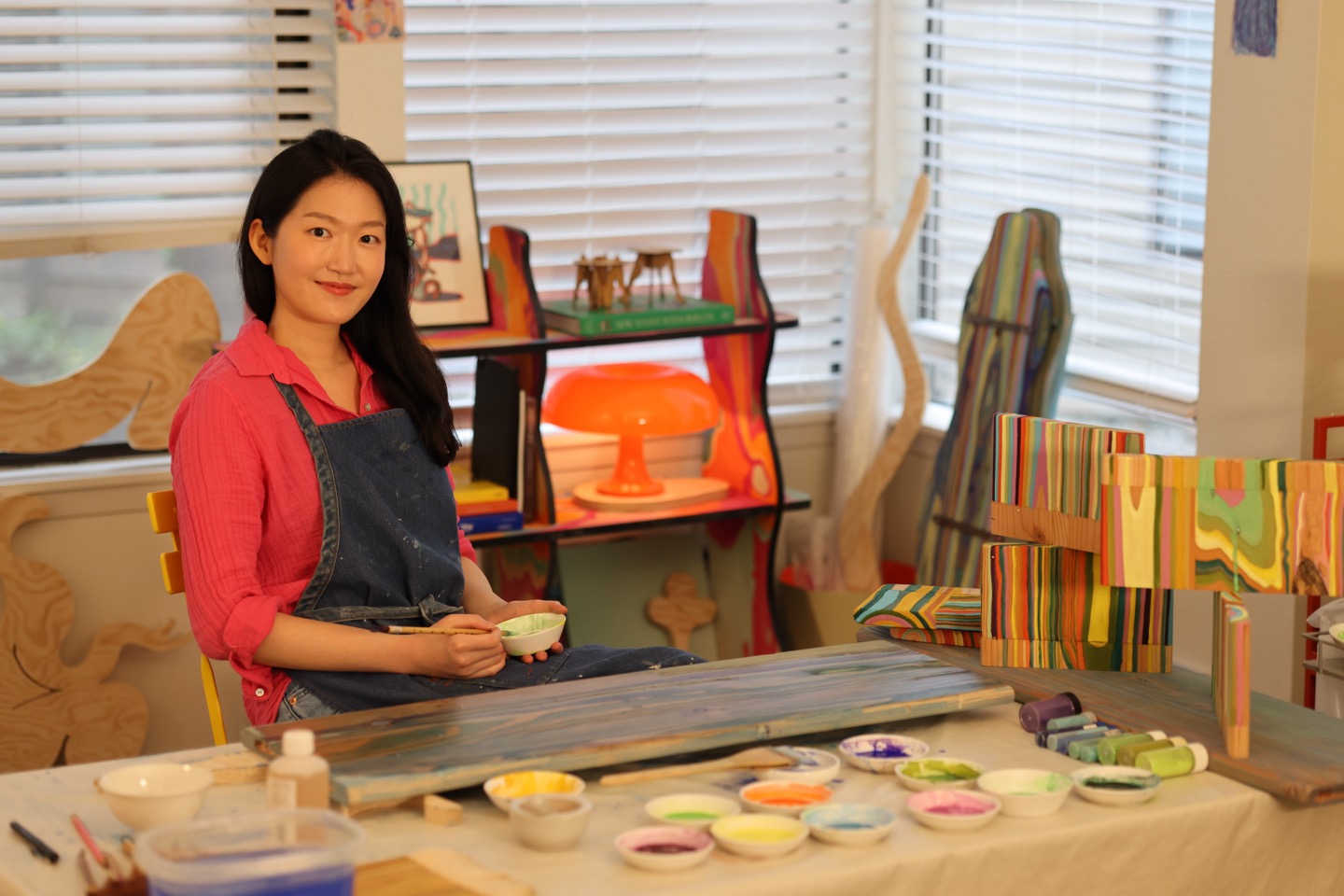
Wood is my primary material, and wherever I live or work, I use locally sourced wood from that place. The one material I carry with me across borders, however, is Bunchae (분채), a mineral pigment traditionally used in Korean painting and central to my sense of identity.
Unlike Western mediums such as oil or acrylic paint, which tend to conceal underlying layers, Bunchae permeates the surface, allowing color to absorb, blend gradually, and accumulate depth over time. This process reflects the philosophy of Korean painting, where color breathes with the material rather than dominating it. In my practice, I apply Bunchae onto wood panels cut along the contours of my drawings, merging traditional techniques with sculptural form.
Living abroad has furthered my desire to share Korean aesthetics with broader audiences. As an active member of the Korean-American Artists Association of Washington (KAAW), I have participated in group exhibitions introducing Korean visual culture to local and international viewers, including a recent showcase at the Seattle Convention Center. Witnessing genuine curiosity and appreciation for Korean art has been so important to me.


Where in the city do you go when you need to recharge creatively?
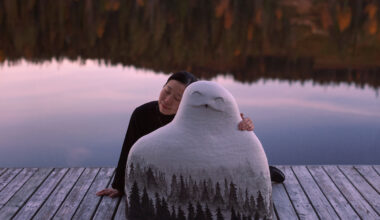
When I need to recharge my creative energy, I turn to nature. Much of my work has evolved through a dialogue between organic forms found in the natural world and a Korean sensibility toward color. One place I return to is the Hoh Rainforest in Olympic National Park. Walking among moss-covered trees feels like stepping into an ancient, timeless space. The layers of moss, the silence, and the sense of suspended time embody an accumulation of history, all qualities that closely mirror my creative process.
This relationship with nature continues in my studio practice. Working with wood feels like following nature’s footsteps; each tree ring carries its own grain, texture, and memory of time. As I follow the natural grain, I allow color to gradually permeate the surface, layer by layer, much like rain soaking into a forest.

What are you currently working on?
I am currently preparing for a solo exhibition at Hippie Hannam Gallery in Seoul this October. This body of work emerges from a pivotal chapter in my life. After the passing of my father, I soon became pregnant and gave birth. These two experiences of life and death unfolded almost simultaneously, and confronting both led me to understand them not as opposites, but as interconnected phases within a single, continuous flow.
Becoming a mother has reshaped my perspective and artistic practice. After my daughter Zoey was born, the theme of life began to flow through my work.
From this experience, I am developing the Seed series, which reflects on existence as a continuous cycle rather than a linear progression. The series explores the life cycle as a looping structure (seed, pregnancy, birth, growth, youth, aging, withering, death, and return to seed), tracing how continuous rebirth shapes human life and artistic form. I look forward to presenting the Seed series in my upcoming solo exhibition.