k-art in london
an interview with yoona kwon
What first brought you to London? Was it a specific plan or more of a feeling?
During my final undergraduate year in Korea, I felt a strong desire to grow as an artist. After completing my graduation exhibition, I was deeply uncertain about my future and even questioned whether I could pursue life as an artist. One of my professors encouraged me to consider studying abroad to broaden my experience, and this gave me the confidence I needed. I applied to the Slade School of Fine Art, which I had always dreamed of attending, and was accepted into the MFA program, where I am currently studying.
What were your first impressions of the city when you arrived?
Honestly, the first thing that struck me was the weather. I thought to myself, “So this is what they mean by British weather.” It was even cloudier and rainier than I had expected. After that, what impressed me most was the number of cultural spaces open to the public for free. This accessibility creates an environment where people can engage with art and culture more easily, which I found very positive. Especially given how expensive the cost of living is here, being able to enjoy something for free felt like a small joy.
How would you describe the creative energy or art scene in London?
Studying in a studio environment that brings together people from diverse countries and cultures, I have noticed that approaches to any given theme feel more open and varied. Back in Korea, most of my peers were around the same age and shared similar cultural backgrounds, so we often came up with similar interpretations of what we saw. In London, however, differences in age, race, and historical context allow for completely different readings of the same work or idea. I find this expansion of meaning very stimulating.
Has the city changed your artistic practice in any way?
Living in London has shifted both the cultural and visual dimensions of my practice. Being surrounded by people from such diverse backgrounds has made me more open-minded, and I have become more conscious of how different audiences might interpret the same work in unexpected ways. This has encouraged me to embrace ambiguity and multiplicity in my approach.

What is one moment, project, or exhibition in the city that you will never forget?
Seeing Frieze in London. Since London is the birthplace of Frieze, it felt different from the editions I experienced in Korea. With both Frieze London and Frieze Masters taking place in Regent’s Park, the scale felt larger and more ambitious. Most of all, it was unforgettable because it offered such a clear view of the art market in one setting.
In what ways do your Korean roots continue to shape your work while living abroad?
Living in London and being exposed to so many different cultures and perspectives has made me focus more on my Korean culture. I find myself watching historical dramas more actively than I did in Korea, even exploring their historical contexts. My decision to use organza in my work was inspired by the Juryeom (a traditional type of beaded curtain or blind) I noticed in these dramas.


Is there a visible or active Korean art/creative community in London?
I am part of an organization called Louise the Women, a women’s art collective. Most of its events take place in Korea, but through joining I was able to connect with a few artists currently active in London, which has been very helpful in building a sense of community here.
Have you observed any interest or reception toward Korean art in your city?
Yes, I have noticed growing interest in Korean art in London. For example, Mire Lee’s installation work, Open Wound, was featured at Tate Modern, drawing attention from both the public and the media. Exhibitions like this show that audiences are curious about contemporary Korean art and are engaging with its unique perspectives and forms.
If you had to describe London as a creative “material,” what would it be and why?
The city is full of diverse people, places, and events happening simultaneously, which constantly exposes me to new ideas and perspectives. Like a collage, these experiences can be combined, layered, and rearranged in my work, providing endless material for reflection and creation.
Where in the city do you go when you need to recharge creatively?
When I hit a point where making art feels difficult and I lose sight of why I am doing it, I visit exhibitions in galleries around Soho. Seeing other artists’ work refreshes my eyes and reignites my motivation, reminding me of why I chose this path.


If a Korean artist were to visit London for a month, what would you recommend they do, see, or experience?
It may sound obvious, but I would strongly recommend the National Gallery, the British Museum, and the Royal Academy. If they visit in June, I would also suggest attending degree shows at art schools, as it is an excellent opportunity to see what young artists are working on.
What are you currently working on? Are there any upcoming exhibitions, collaborations, or ideas you are excited about?
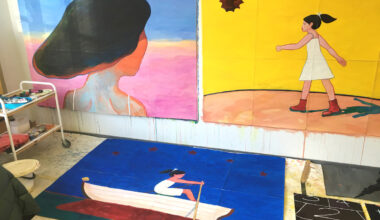
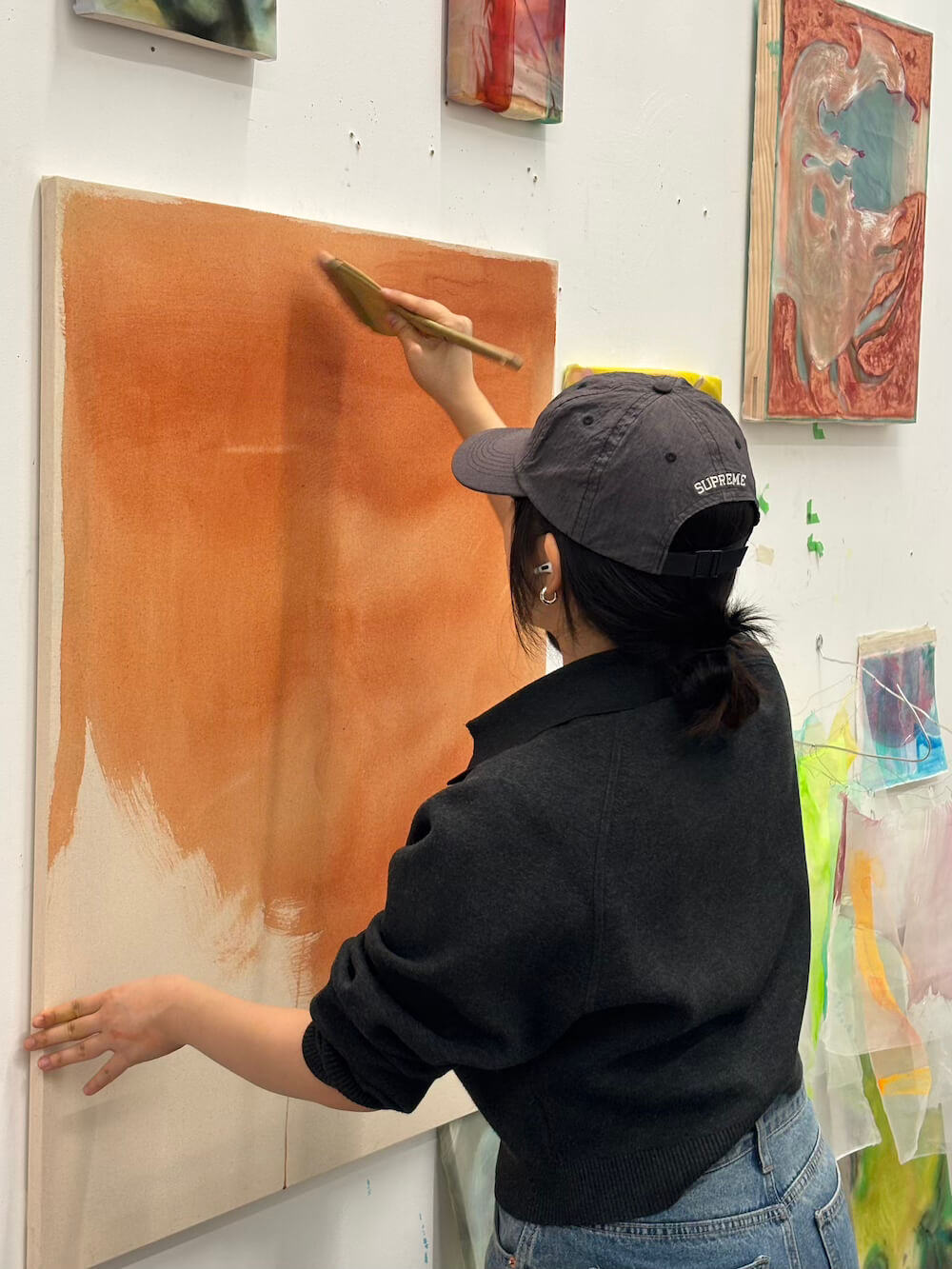
I am experimenting with layering organza and linen, exploring how translucency creates ambiguity and invites viewers to engage more deeply. Alongside this, I am collecting images and sketches that relate to memory and transformation, which might develop into larger works.

How do you imagine your relationship with London evolving over time?
I hope to form a more grounded connection, not just as a student but as an artist contributing to and exchanging with this community. I expect London will keep challenging and expanding the way I think about art and its relation to people around me.