k-art in helsinki
an interview with Minjee hwang kim
What first brought you to Helsinki, and what were your first impressions of the city?
I came to Helsinki for school in 2018 (MFA in Painting at the Academy of Fine Arts), but my arrival in Finland happened before, in the winter of 2015. I was in Kokkola, a small town in Northwest Finland, as an artist-in-residence at the Drake Arts Centre (which no longer exists) for approximately two months. I was a recent graduate with a BFA from Korea at the time, and as this was my first “real art world opportunity,” I was naturally very keen on Finland for giving me a chance.
I also learned about the Academy of Fine Arts during this residency through fellow artists. Despite returning to Korea after the residency ended, I still wanted to pursue my master’s degree abroad. When I felt ready to apply for MFA programs and started narrowing down options, I was drawn to Helsinki for various reasons: the English program, affordable tuition for non-EU students (no longer affordable due to policy changes), clean and safe city life, and a new school term starting in January instead of September, meaning I didn’t have to wait another half a year to begin studies. So, I applied, got accepted, and moved here in January 2018.
As I often joke with my close friends, I feel dead (in a good way) in Helsinki. As in, “Have I already died, and is this what the afterlife looks like?” I definitely don’t mean that Helsinki is heaven on earth, but everything is just so mild here. I now have some nooks and crannies I enjoy in the city after living here for many years, but in general, the level of comfort and lack of greed is disturbing.
How would you describe the creative energy or art scene in Helsinki?
First, I see a dichotomy between Finnish artists and English-speaking immigrant artists, and this starts from school, where classes are divided by language groups. I feel like these two groups have different paths to becoming an artist. Second, the whole ecosystem is too dependent on grants, and with the grant system, the emphasis is on the phase before you make art (the application phase) more than on the end result (what you actually make). I believe that this hinders the general quality of art being produced here. Even when I apply for exhibition slots, no individual from the institution is ever interested in what I will actually bring to the table following the selection phase. I could put up anything, and that would be fine.
Have you collaborated with local artists, institutions, or communities?
Just as I was instantly fond of Finland because it was my first real art world opportunity, I find my first “real (paid) art job” especially memorable. It was a project commissioned by the Feminist Culture House for an outdoor flag to be hung on the premises of Cultural Center Stoa as part of a group exhibition titled, What’s the Use of Intersectionality?
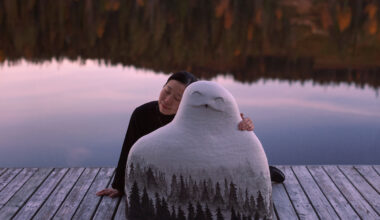
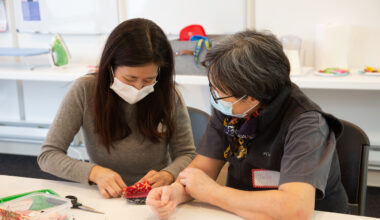
I hand-sewed secondhand bedsheets using the jogakbo (Korean patchwork) technique and dyed them with natural ingredients. While hoisted on the outdoor flagpole, the flag lost its color, yet it could never return to its original state. It was made as a commemoration flag for the Atlanta Spa Shooting, to remember the lives that once existed and what they left behind.


Has the city changed your artistic practice in any way?
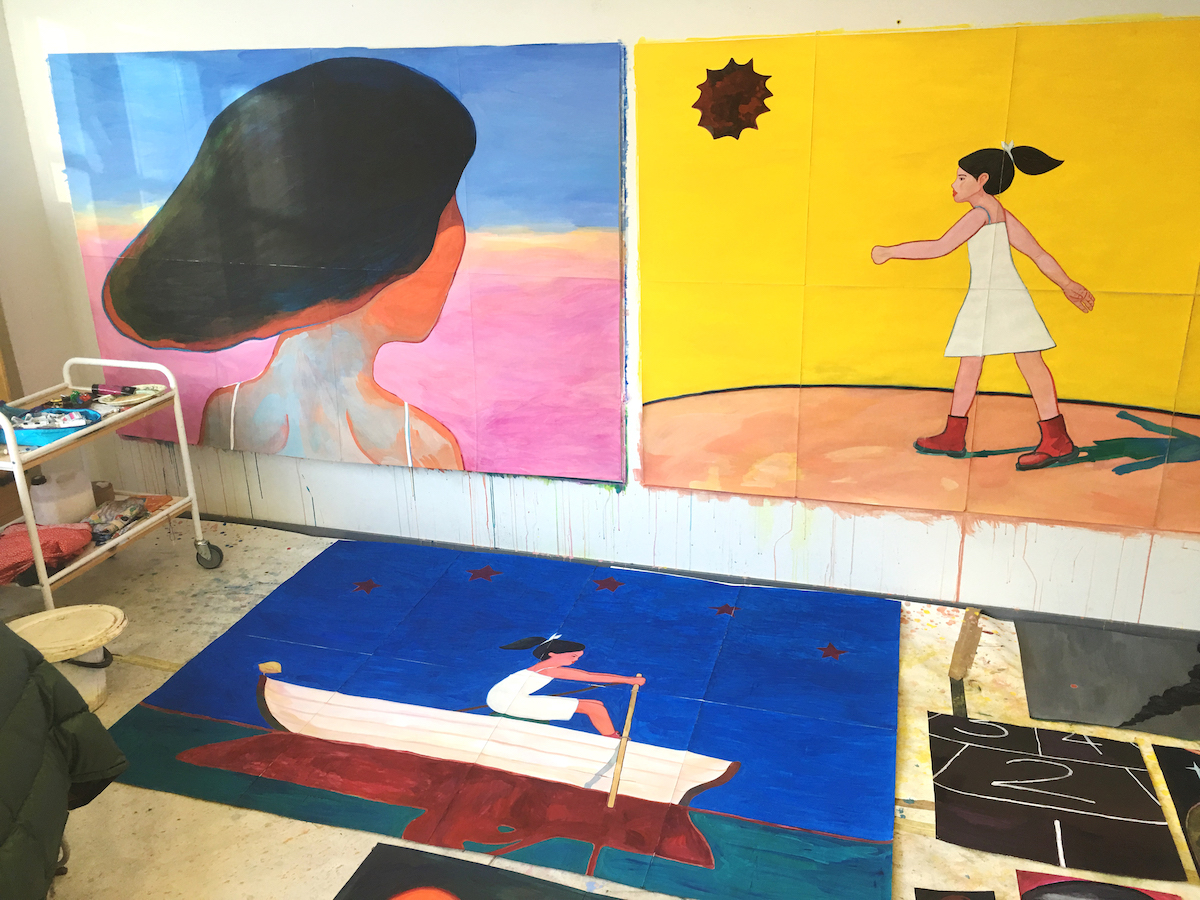
Helsinki allowed me the dimensions to think about myself. Coming from Seoul, where the pace of life is much faster, the population is denser, and personal space is scarcer, there is not enough time to actually sit by yourself and look inward. There is constant pressure to produce and “be useful” in Seoul, and at a high level as well. I often felt like all I could do was “react” to the outside world, and even that took all my energy and breath, rather than reflecting on myself. There is, of course, no right or wrong way to make art, and often it is a combination of both, but for me, I want to make art about myself. So, Helsinki’s slowness and emptiness really offered me the much needed time and space to experience myself. That said, I don’t know if this is beneficial for the Helsinki art scene in terms of both quantity and quality, because I believe certain levels are only achievable by pressure cooking, which is what lacks here in my opinion.


What is one moment, project, or exhibition in the city that you will never forget?

Getting a Helsingin Sanomat review on my solo exhibition.
In what ways do your Korean roots continue to shape your work while living abroad?
Korean culture thrives toward perfection, whatever this perfection is and whoever defined it. I think this is why K-pop and the Korean entertainment industry are so popular worldwide. They create a spectacle, a giant “perfect” role play apart from reality. I can’t think of an appropriate English word for this, but in Korean, it would be 밀도 (or 완성도?). I think this plays a big role in my work and in my attitude toward being an artist, especially in calling myself a professional. Koreans put a huge emphasis on the “getting paid” part. I suppose in a highly capitalistic society, if you are receiving monetary value for your work, it better be good.
Is there a visible or active Korean art or creative community in Helsinki?
I know a few Korean, half-Korean, and Korean diaspora artists and art workers, but I won’t call it a community. The city is very Japan-focused, and I feel like most of their Finland-Asia resources are allocated to fostering a connection with Japan.
Where in the city do you go when you need to recharge creatively?
Stockmann and then Thai food.
If a Korean artist were to visit Helsinki for a month, what would you recommend they do, see, or experience?
Ateneum, to see how visual arts played a role in forming Finnish identity. The Alvar Aalto house, representing Nordic modernism, which is still very relevant in the Finnish lifestyle today. A walk around Töölö Bay, or along any beach area, especially on a summer night to experience the stretch of time. Antique shops and recycling centres.


What are you currently working on?
I’m not working on anything really at this exact moment, but I am very busy these days making and saving money. I am going to Paris for the Cité Internationale des Arts residency later this year, so I am saving up for that. I am really looking forward to the residency, to have more space to spread out and make art (I didn’t have a studio for many years due to the cost), and a dedicated chunk of time without having to juggle multiple jobs. There is also talk about a group show in Japan in the fall, which I am very much hoping to happen, as it would be my first Asia-based presentation in a decade.


How do you imagine your relationship with Helsinki evolving over time?
I got my permanent residence permit last year, which allows me to be out of Finland for longer periods of time. I don’t know what this will mean for me in the future yet. I am slowing down a little here, applying to fewer exhibitions and saying no to some offers. This is because I am considering leaving for the time being. Helsinki is still my home, but I need a stronger anchor, both personally and professionally, to envision my life here in the long run. The knowledge that I can come back here if I choose makes me more willing to leave, if you understand the feeling. Everything is up for chances!