k-art in boston
an interview with kyungmin park
What first brought you to Boston, and what were your first impressions of the city?
I moved to the Boston area after being hired as a professor at Endicott College in Beverly, Massachusetts. I spent my first four years living on the North Shore, and over time, I felt drawn closer to the city, where there is more diversity, a more active art scene, and greater opportunities to connect with a broader creative community.
My first visit to Boston was shortly after my undergraduate studies at Alfred University. The city felt very big to me at the time, and I was struck by how full it was of history and culture. Boston is a place where historical and contemporary elements coexist side by side, and that contrast made a strong impression on me from the beginning.
I officially moved to the Boston area in 2016 after being hired at Endicott College. Before that, I had been living in Helena, Montana, where I spent two years in an artist residency at the Archie Bray Foundation. In Helena, I was very aware of my race because there was a very small Asian population. Moving to Boston brought an immediate sense of relief and comfort. For the first time in a while, I didn’t feel so foreign. Seeing so many Asian grocery stores and restaurants made me incredibly happy.
How would you describe the creative energy or art scene in Boston?
I currently live in Fort Point, where many artists have studios and live–work spaces. It sometimes feels like I’m living in a small creative bubble, because many of my neighbors are artists, and the area always carries a sense of creative energy. Open studios and local events create great opportunities for artists and the public to connect directly.
SOWA in the South End is another important area with many galleries. Overall, Boston’s art scene can feel somewhat conservative, but at the same time, there are many contemporary movements and exciting projects happening throughout the city. While there is a steady and meaningful creative presence in Boston, it often feels quieter and more community-driven than larger art capitals.
Have you collaborated with local artists, institutions, or communities?
Living in Fort Point has naturally connected me with the local artist community. Each year, Midway Artist Studios, where I live, hosts an open studios event alongside a resident exhibition, and the larger Fort Point Arts Community also opens its doors to the public. Participating in open studios has been especially meaningful because it allows me to meet those viewing my work and have direct conversations about my work and process.
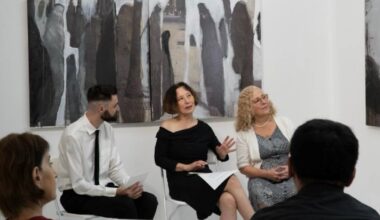
I have exhibited through galleries in the Boston area, including group exhibitions with Bromfield Gallery and Piano Craft Gallery. I have also participated in multiple group exhibitions and a two-person exhibition at Lacoste Gallery in Lexington, Massachusetts. In addition, I participated in an exhibition with the Korean Cultural Society of Boston at the Lexington Arts and Crafts Society and joined an artist panel for The Art of Play at the Boston Children’s Museum.
I have been involved with the Society of Arts and Crafts through the CraftBoston exhibition and my role on the Artist Advisory Council. Teaching and service have also been important ways I’ve connected with the community. In 2017, I taught as a visiting artist at Massachusetts College of Art and Design, and I currently serve on the Collections Committee at the Fuller Craft Museum. These experiences have helped me build meaningful relationships within the Boston-area artistic community.


Has the city changed your artistic practice in any way?
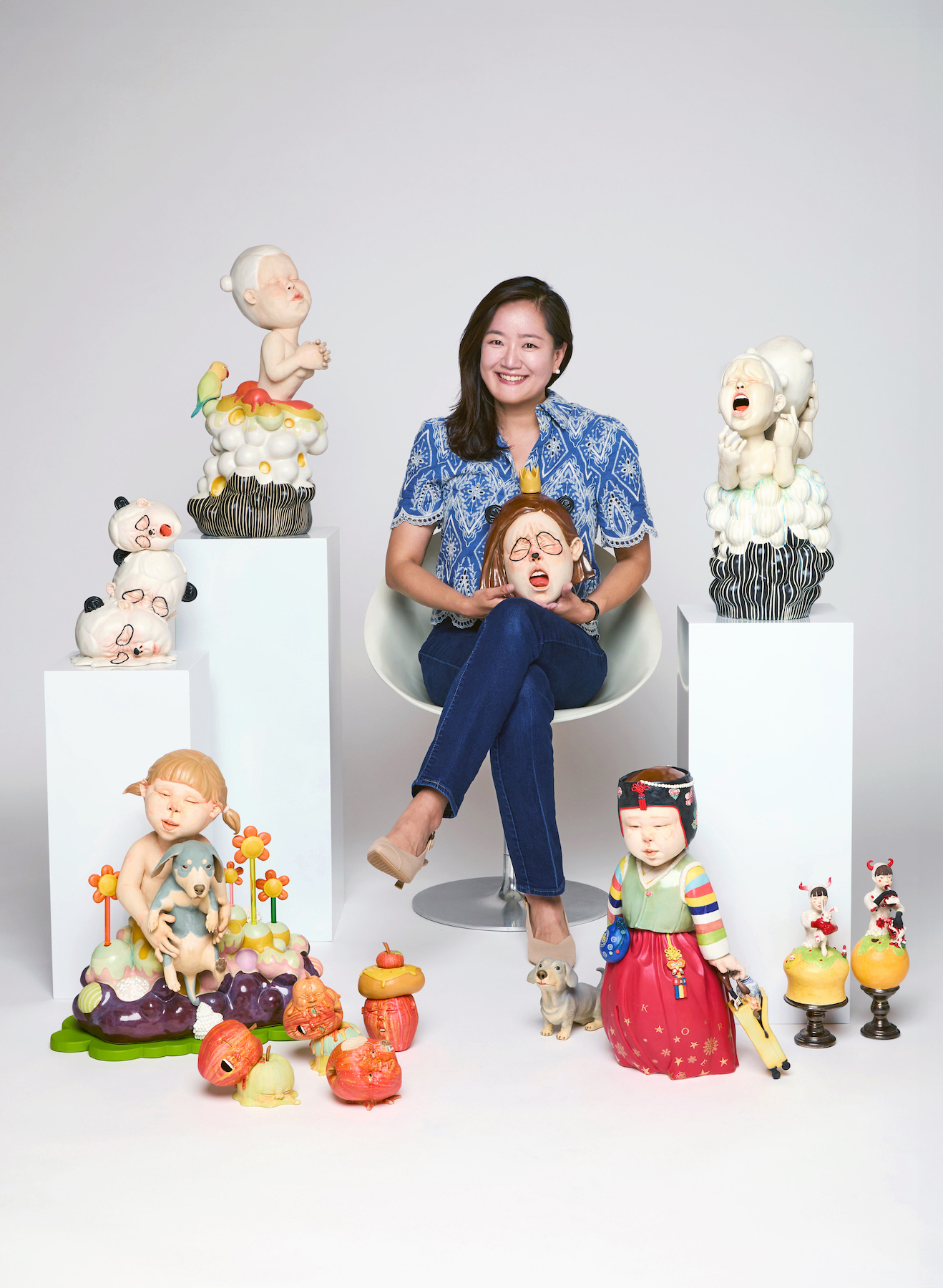
Living in a high-cost city has definitely shaped my studio practice. Limited space and the cost of materials have pushed me to become more efficient and strategic in how I work. I don’t yet have the space for my ideal studio, including both a kiln and storage space in my building. So, my kiln is installed at the college where I teach, which means I drive about 40 minutes to fire my work. This has changed the way I plan and build my sculptures. Working in a 128-square-foot studio that I separated from my living space has encouraged me to think carefully about scale, structure, and timing. I’ve developed ways to build stacked forms and plan projects more intentionally so that I can continue making ambitious work despite the limitations. In many ways, the city has taught me to be resourceful and adaptable while continuing to pursue large-scale ideas.


What is one moment, project, or exhibition in the city that you will never forget?
One moment I will never forget is when my work was featured in The Boston Globe. Being recognized as an artist and educator in the city where I live and work felt incredibly meaningful and surreal. It was a special experience to speak with Boston’s art critic, Cate McQuaid, about my studio practice and artistic process. I also had a memorable conversation with photojournalist Jessica Rinaldi, during which we discussed our experiences and careers as artists in the same city.
What made this moment even more unforgettable was seeing people read the newspaper at South Station during their commutes. Watching the article become part of the everyday life of the city, outside the studio and gallery context, felt deeply moving and rewarding. This experience truly connected me to Boston’s artistic community.
In what ways do your Korean roots continue to shape your work while living abroad?
When I moved to the United States in 2006, I focused intensely on adapting to a new culture, language, materials, and education system. At times, it felt as if I was starting over completely and even losing some connection with where I came from. After living and working in the U.S. for twenty years, I’ve realized that my Korean identity has never faded.
My background continues to shape my work through themes of memory, migration, and personal narrative. Living between cultures has made me more aware of my identity as a Korean artist. Working with clay also helps this connection; its flexibility and ability to be reshaped remind me of both adapting to new places and returning to where I began. Even as my surroundings and language change, my cultural roots remain central to my work.


Is there a visible or active Korean art or creative community in Boston?
Yes, there is an active Korean creative community in the Boston area, and I have engaged with it through exhibitions and events. I was honored to be selected by the Korean American Citizens League of New England as a 2025 Moon Jar Artist, creating six moon jars to honor that year’s award recipients. The Korean Cultural Society of Boston also hosts many art and cultural events throughout the year, providing meaningful opportunities for connection and engagement within the community.

Have you observed any interest or reception toward Korean art in your city?
There has been increasing interest in Korean art and culture in recent years. In the Boston area, many people are curious about Korean contemporary art and eager to learn more about Korean artists and traditions. Exhibitions, events, and cultural programs have helped create more visibility and dialogue, and I often feel a genuine openness from audiences who want to engage with new perspectives.
If you had to describe Boston as a creative “material,” what would it be and why?
I would describe Boston as brick. The city is known for its red brick buildings and streets, especially places like Newbury Street and the Cambridge area, which give it a strong sense of history and character. At the same time, Boston continues to evolve, with new ideas and creative communities constantly emerging. That balance of history and change makes it feel like a strong and enduring creative material.
Where in the city do you go when you need to recharge creatively?
When I need to recharge, I often walk along the waterfront in the Fort Point and Seaport area. Being near the water helps me clear my mind and reset. I also like visiting galleries in SOWA and spending time at museums such as the ICA, the Museum of Fine Arts, and the Isabella Stewart Gardner Museum. These places give me quiet time for reflection and new inspiration.

If a Korean artist were to visit Boston for a month, what would you recommend they do, see, or experience?
Start with the Boston Public Garden, then Charlestown, or the North End, to see some of the historical heart of the city. Then go through Chinatown and try some authentic food there.
In addition or alternatively, Cambridge offers one of the world’s most prestigious and concentrated academic communities. Seaport shows a more modern, rapidly developing side of the city, while South Boston has a rich Irish heritage. Finally, for Korean food, Allston is a great area to explore.
For the art experience, I would suggest visiting the museums I mentioned earlier, as well as exploring galleries in SOWA. Attending open studio events and visiting artist studio buildings in Fort Point would be a great way to connect with the local artist community. I would also recommend spending time in independent bookstores, libraries, and cafés, which are an important part of the city’s creative culture.
What are you currently working on?
I am currently developing a new figurative sculpture series that could grow into larger installation-based work, and I am actively seeking grants and funding to support these future projects.
This year, I will participate in the National Council on Education for the Ceramic Arts (NCECA) annual conference in Detroit in March, where I will showcase my work in the main annual exhibition. I am also looking forward to leading workshops at Clayroom in San Mateo, California, participating as an invited presenter at the Women Working with Clay Symposium at Hollins University in June, and teaching a workshop at Pocosin Arts School of Fine Craft in July.
How do you imagine your relationship with Boston evolving over time?
The city has so much to offer the creative community, and I hope to continue expanding my opportunities to exhibit, teach, and collaborate with other artists, educators, and creative individuals. I would also love to find a more permanent space where I can grow my studio and create more community-centered opportunities in the future. Boston has become an important part of both my personal and artistic life, and I look forward to continuing to contribute to and grow alongside its creative community.