featured artists
holding it together
Feel the city flex and pulse through Jeong Hur’s frames.
Jeong Hur moved to NYC in 2017 to begin his MFA program at the School of Visual Arts. Upon arrival, the city felt oddly familiar to him, its pace and rhythm echoing the spirit of the Seoul he knew so well. Yet, the stark differences between the two materialized in the diverse array of people, colors, and even the sharp scent of ammonia that emanated from the streets.
While the competition is brutal at times, a constant flow of arrivals to NYC provides Jeong with unlimited access to new work and creative approaches. Here, each neighborhood flaunts its own ever-evolving character, with graffiti on walls transforming overnight and construction projects popping up abruptly from block to block. Observing artists respond to subtle shifts in the landscape while freely crossing mediums continued to spark fresh ideas, inspiring Jeong to push personal boundaries and transcend the comfort zone he was trained in.
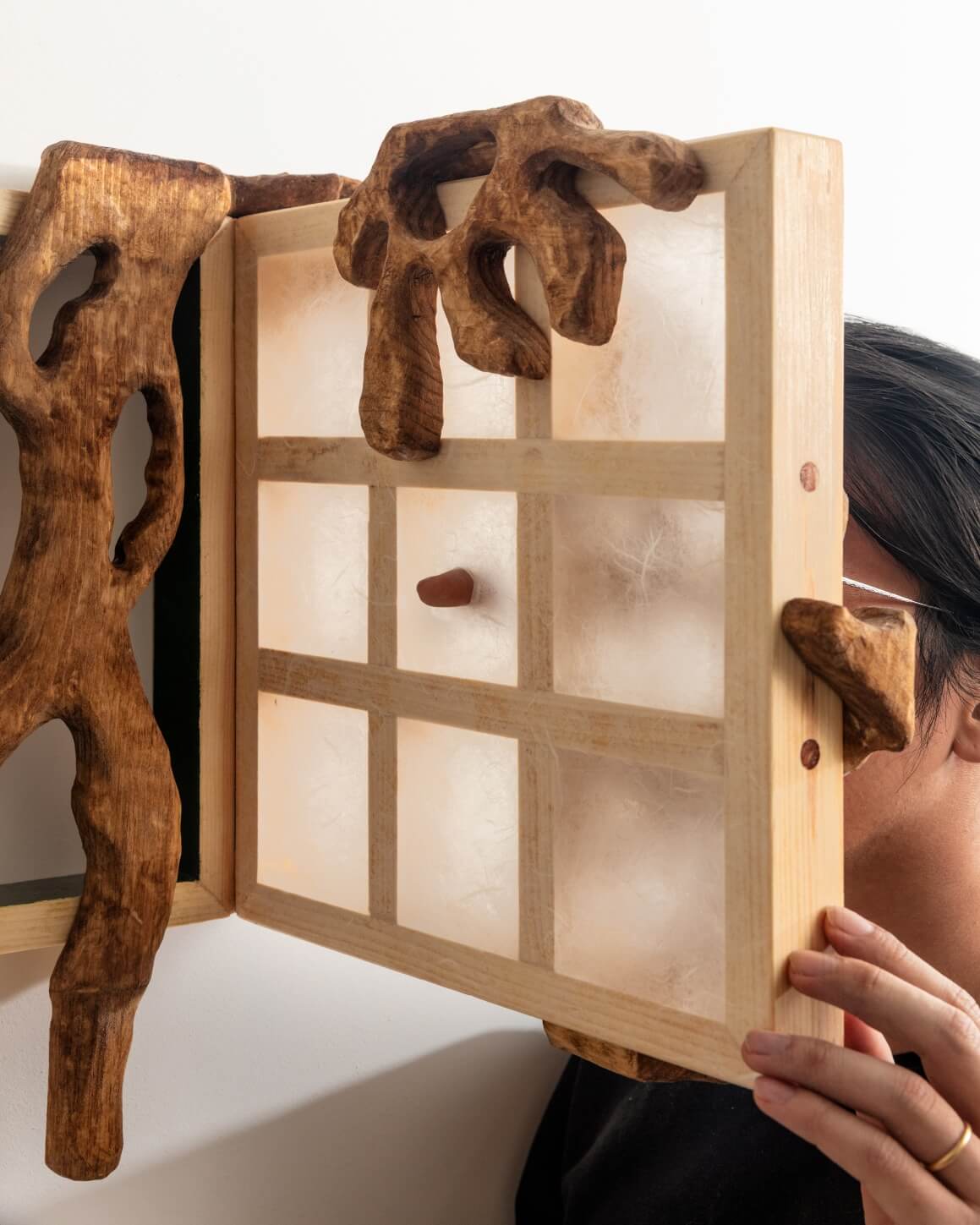
Jeong remembers working full days as a photo assistant while preparing for a show supported by the Bronx Council on the Arts. His studio at the time was underground: a space where he would build, sand, and layer frames out of pine wood sourced from local hardware stores well into early hours. Though urban distractions reverberated beyond and time felt stretched, compressed, and forever weighed down by the pressures of daily life, the energy of that basement was controlled by the methodical precision of Jeong’s own two hands. It manifested unseen in the wood dust that packed itself into the tread of his shoes, the ink that embedded itself under his fingernails, and the tiny splinters that clung to the rolled cuffs of his pants. For Jeong, exhibiting these works in the public realm felt unreal in the most exhilarating of ways, like the world he inhabited under the cover of darkness was finally taking its first breath.
One piece that epitomizes Jeong’s time in NYC is Held Too Long (2025). The vertical stack of window-like frames alludes to the structure of NYC’s neighborhoods, histories, strangers, and languages, all playing to their own tune while held together by some kind of invisible tension. The carved forms function like hands trying to hold, interrupt, support, or negotiate these moving parts as they pass through boundaries. As the opaque hanji turns slightly translucent with the oil, the essence behind it radiates through like memories that surface only to recede once more. Ultimately, moments of repair became part of the work itself, as cracks in the wood, tears in the paper, and the spontaneous spread of the dye represented Jeong’s desire to remain present in a city that moves with such swift intensity and unpredictable abandon.