k-art in stockholm
an interview with bogil lee
What first brought you to Stockholm, and what were your first impressions of the city?
I first moved to a small city called Nyköping in Sweden right after I completed my bachelor’s degree. At that time, I had no intention of pursuing a career as an artist in any way as I needed to find a job to support myself. A few years idly passed while I worked as a restaurant server. Then, the pandemic hit and I got laid off. Suddenly, I was forced to think about what I really wanted to do with my life. Realizing that I wanted to resume my artistic practice, I applied for and got accepted to the Master’s program at Konstfack for which I moved to Stockholm.
The city felt “lagom” in the most positive way. This word, in my opinion, demonstrates the Swedish attitude towards life, meaning “not too little, not too much, just the right amount”. After experiencing the drastic change of environment from Seoul to Nyköping, Stockholm was just the lagom size, with the lagom population size I needed. For instance, there are subways but not too many lines like in Seoul.

How would you describe the creative energy or art scene in Stockholm?
In Sweden, funding in various amounts and forms are available to those in the creative fields. These funding opportunities, as offered by public and private foundations, have a great impact on the way individual artists work as well as the creative communities here.
Speaking from my own experience, financial support has helped me focus on my artistic development without having to spend too much time doing other work to make ends meet. However, I sometimes find myself feeling that my artistic process is limited by this same funding system. To secure funding takes time, during which certain ideas die down. Moreover, I sometimes feel like I have to modify ideas in the name of getting financial support, which can be quite frustrating.
I think many artists in Stockholm share the same thoughts and sentiments, and that shapes the scene. Besides, under the current conservative government, funding is constantly being cut, and the related institutions and organisations are getting closed and merged. This presents a big threat, putting creative communities in a precarious space of comfort and anxiety.
Have you collaborated with local artists, institutions, or communities?
Last year, Konsthantverkscentrum (The Swedish Crafts Centre) gave me a chance to invite an artist and have a collaborative exhibition. The Norwegian artist, Karina Nøkleby Presttun joined upon my request. Working closely with Presttun was not only an exciting experience, but a huge learning opportunity for me.


Has the city changed your artistic practice in any way?
Yes. Stockholm has allowed me to think of my artistic practice in terms of longevity and sustainability. It has become clear to me that it is more important to find the lagom balance between my creative practice and the other parts of my life, sustaining my artistic career economically, physically, and psychologically.
What is one moment, project, or exhibition in the city that you will never forget?
Of all the great projects I have witnessed in Stockholm, I would say “SPIT.” This performance, by the choreographer-performer Carl Olof Berg, and the artist, Matt Lambert, took place in Livrustkammaren (The Royal Armoury). Researching through the body, objects, and the museum archive, this beautifully crafted work of art enabled me to see performance art in a completely new light.
In what ways do your Korean roots continue to shape your work while living abroad?
There are certain things that can only be explained through my Korean background in the ways I feel, think, and carry myself around. These aspects of me inevitably come through in the artistic works I do. However, what interests me is not how my Korean root demonstrates itself, but rather where it does/will take my practice to while growing and getting entangled in “non-Korean” territories.


Have you observed any interest or reception toward Korean art in your city?
I have noticed that general interest in Korean culture has grown in the last few years, although it is usually food and cinema that take the spotlight. However, I believe Korean art started attracting a bigger audience since the Korean Culture Center opened its doors in Stockholm in 2023.
If you had to describe Stockholm as a creative “material,” what would it be and why?


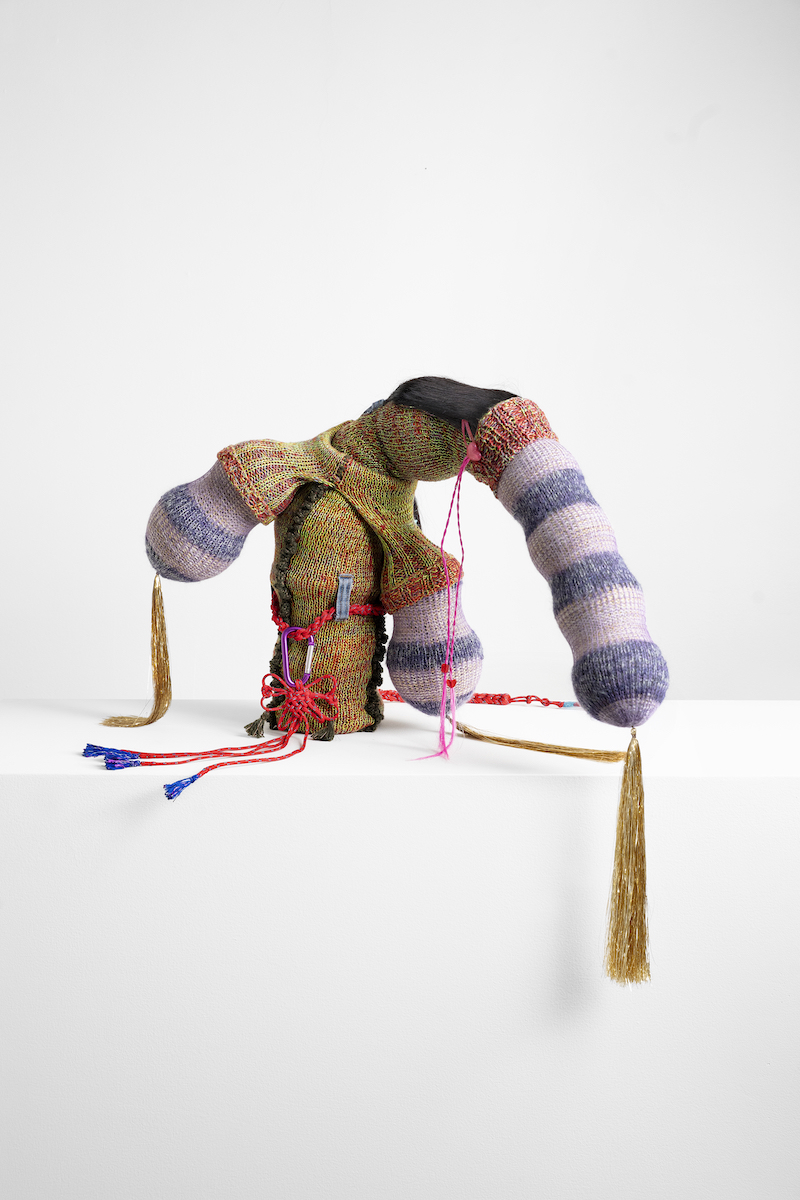
Knitted textile. For its strong tradition to the technique, and for its great potential to embrace and expand.
Where in the city do you go when you need to recharge creatively?
Vasamusset. It’s a museum showcasing and preserving the Vasa ship that sank after sailing only 1km from the port in the 17th century. In this enormous evidence of failure and tragedy, I see desire, greed, hope, and everything else that makes up the humanities. And that keeps me going.
If a Korean artist were to visit Stockholm for a month, what would you recommend they do, see, or experience?
Walking around Skeppsholmen, going to Djurgården and visiting Rosendals Trädgård, bathing at Vinterviken, berry or mushroom picking, a short trip to Gotland, and enjoying the complete silence.


What are you currently working on?
I have an exhibition coming up in April with an artist collective I started with a few of my colleagues.
How do you imagine your relationship with Stockholm evolving over time?


My hope is that the relationship between me and the city continues to deepen without us consuming each other.