k-art in munich
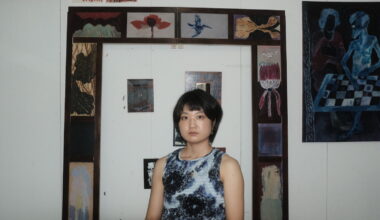
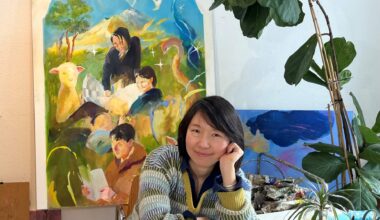
an interview with youjin yi
What first brought you to Munich? Was it a specific plan or more of a feeling?
My move to Munich was very intentional. I started out in Münster to master German, then toured art academies nationwide, meeting with professors to prepare my portfolio. I’d heard Bavaria could be conservative, but I found Munich felt incredibly free and open (as they say, “München ist nicht Bayern!”). But the one thing that sealed the deal? Professor Günther Förg. The chance to learn from him was why I came.
What were your first impressions of the city when you arrived?
My first decisive impression was formed even before I moved here. I had spent two months traveling through Europe to find the city where I could truly picture myself. I vividly remember walking from Odeonsplatz down the grand boulevard of Ludwigstraße toward the Academy of Fine Arts. What impressed me so deeply was the atmosphere: on one hand, the magnificent, historic architecture of the state library and the university; on the other, the entire area was filled with the vibrant, intellectual energy of so many young students. That combination left a powerful and lasting impression.
How would you describe the creative energy or art scene in Munich?
From my perspective, Munich’s creative energy isn’t a loud, chaotic explosion like you might find in other cities. It’s more of a deep, concentrated intellectual current. It’s less about being constantly “on the scene” and more about the substance of the work and the rigor of the dialogue surrounding it. I feel at home here. My creative process even includes personal rituals, like visiting the Botanical Garden to look at the cacti. It’s a kind of Gehirnmassage (brain massage) for me.
This energy is supported by the city’s very fabric. There is a genuine, educated interest in art among the public and a robust support system for emerging artists. So, I would say Munich’s creative energy is less of a firework display and more of a steady, intense flame, fueled by serious, critical discourse.


Have you collaborated with local artists or institutions here?
Absolutely. My collaborations in Munich have been deeply rooted in fostering a cultural dialogue between Korea and Germany. A seminal moment was the 2018 exhibition “Schiffe setzten über” (Ships Cross Over) at the Galerie der Künstler of BBK Bundesverband. It was my first major project with fellow Korean artists in the city, and together we explored the complex theme of artistic migration.
This dialogue evolved further in 2021 with “SOMEWHERE IN BETWEEN?” at the Rathausgalerie Kunsthalle. This project was particularly memorable for expanding the conversation beyond traditional art to embrace contemporary pop culture, even incorporating K-Pop dance workshops.
In addition to these focused projects, I have maintained a consistent presence in the local art scene by participating in the annual Jahresgaben group exhibition at the Kunstverein München every year since 2013.
Has living in Munich changed your artistic practice in any way?
Absolutely. Munich has profoundly influenced my artistic practice, not by adding something, but by taking something away: distraction.
The city provides an environment for calm, rational concentration. This lack of constant external noise allows me to turn inward and truly focus on my subconscious. My process has become less about reacting to the outside world and more about excavating what lies within. That, to me, is the ultimate privilege of being creative here, the mental space and freedom to engage with your own thoughts, uninterrupted. It has fundamentally shifted my approach from responsive to introspective.
What is one moment, project, or exhibition in the city that you will never forget?
If I had to choose one experience in the city that I will never forget, it would be the Pierre Bonnard retrospective at the Kunstbau, titled “The Colour of Memory” (“Die Farbe der Erinnerung”). It was part of the Goetz Collection’s series, and it was a profoundly moving and formative exhibition for me.
It was more than just seeing a few paintings; it was a complete immersion. To have such a comprehensive collection of his work over 130 paintings, sculptures, and posters gathered from museums and private collections all over the world, right here in Munich was incredible.
What struck me most was how the exhibition’s central theme, color as the language of memory resonated so deeply with my own artistic mindset. Bonnard wasn’t just painting a scene; he was painting the feeling of a scene, filtered through his own memory. The way he returned to his recurring motifs, the intimate portraits of his wife Marthe, the still lifes in his home, the landscapes of his immediate surroundings felt incredibly personal and introspective.
His use of intense color combined with what the curators called “spatial ambiguities” and “washed-out” figures was a revelation to see in person. Those weren’t technical flaws. They were the visual evidence of memory itself, which is never perfectly sharp or objectively clear. It was a powerful affirmation of something I feel deeply in my own practice, that the most compelling art often comes not from a direct reaction to the external world, but from that quiet, internal process of remembering, feeling, and translating the subconscious into color and form.
Seeing that exhibition was a deeply validating and inspiring experience that I will carry with me always.
In what ways do your Korean roots continue to shape your work while living abroad?
My Korean roots are not a static memory; they are an active, living part of a constant balancing act. My core identity, my personality, my philosophy, and my fundamental way of thinking is undeniably shaped by my upbringing in Korea. Living abroad, particularly in Germany, has acted as a powerful catalyst. It forces a constant self-examination, a process where I have to distinguish what is intrinsically ‘mine’ from what I am experiencing in this new context. I find my equilibrium by consciously engaging with this dichotomy. It’s a process of looking backward to my roots and simultaneously looking forward to my present life here. I actively confront both the nostalgia for what was and the reality of what is.
Many might see this as a conflict, but for me, this active engagement is precisely what creates stability. It’s not about suppressing my Korean side to fit in, nor is it about rejecting my new experiences. It’s about finding a dynamic balance in their interplay. This allows both the deep connection to my origins and the thrill of the new to coexist, constantly informing and shaping the artist I am today. My work is born from that very space between memory and the present.
Is there a visible or active Korean art/creative community in Munich?
Yes, there is, though I’d describe it less as a formal organization and more as a dynamic, project-based network built on deep collaboration and friendship.
For me personally, the anchor of this community has always been the artist Siyoung Kim. She is a dear friend and a colleague whom I’ve known since my earliest days in Germany. She is a brilliant organizer, and through her, I see the incredible projects that form the backbone of this community.
A perfect example of this and a project that makes me very proud of my peers is the work of the German-Korean artist collective Longega, of which Siyoung is a key member. This collective has been building an artistic bridge between Germany and Korea for years, running a residency program that connects artists in the Italian Dolomites and Gwangju.
While I wasn’t personally involved in their latest project, I followed its development with great excitement. In 2024, for the first time in its history, the prestigious Gwangju Biennale featured a German Pavilion, and the Longega collective was chosen to design it. Their interactive installation, “in between water – 두물마을,” beautifully embodied their spirit of exchange and collaboration. It was a huge achievement for them and for the German-Korean artistic dialogue.
So for me, my engagement with the community is through these deep, lasting friendships. It’s about supporting each other, sharing ideas, and celebrating these major, bridge-building successes that strengthen the creative bonds between our two cultures.
Have you observed any interest or reception toward Korean art in your city?
Yes, I have. While it’s important to put it in perspective, Munich isn’t on the same scale as global hubs like Berlin, Paris, or New York. In this regard, there is a definite and growing
passion for Korean culture here that is quite remarkable.
This shift has had a direct and positive impact on me. On a personal level, the increased general interest has translated into more attention for my work as an artist, which is a clear advantage I didn’t have to the same extent before.
But beyond just surface-level attention, the quality of the engagement has deepened. People are generally much better informed about Korea now, which leads to more nuanced and meaningful conversations about my work and its cultural context.
A perfect example of this was my recent collaboration with the curator Saskia Hendy for the exhibition “Sehnsucht Sehen” here in Munich. As an art consultant who specifically specializes in photography and Korean art, she brought a profound understanding and genuine appreciation for the cultural context to the project. Our collaboration was a wonderful experience, and for me, it was a clear demonstration of the broader, more sophisticated enthusiasm for Korean art that is growing in this city.
If you had to describe Munich as a creative “material,” what would it be and why?
If Munich were a creative material, it would be a solid block of seasoned hardwood, like linden or oak. At first glance, it might seem plain, traditional, or even “conservative.” Its value isn’t in a superficial flashiness but in its deep, reliable grain and its inherent stability. It’s a material with history and integrity.
You can’t work with it hastily. It demands respect, patience, and a deep, rational concentration to reveal the form within. It isn’t a material for fleeting trends; it’s for work that is meant to last, supported by a structure that won’t warp or crack under pressure.
Most importantly, this solid structure doesn’t restrict you; it supports you. It’s the reliable foundation that gives you the absolute freedom to engage in a process of patient, introspective carving. The final artwork isn’t just a surface creation; it’s a form with deep integrity, born from a partnership between the artist’s vision and the material’s steadfast strength.
Where in the city do you go when you need to recharge creatively?
My creative sanctuaries in Munich are the places where I can observe the “Plant Gesture” in nature.
My first stop is the Botanical Garden, especially the cactus house. It’s like a library of concentrated gestures, a place where I can quietly study these architectural forms.
My other, more everyday sanctuaries are right on my doorstep, as I live right between Nymphenburg Schlosspark and Hirschgarten. The Schlosspark offers me the grand, flowing gestures of nature: the way ancient trees bend and the energy of the seasons. In contrast, I find a completely different kind of calm in the Hirschgarten. Though it’s known as Europe’s largest beer garden, for me, it’s one of the most relaxed places in the city.
This combination is perfect for me: the Botanical Garden for focused study, and my own neighborhood with the Schlosspark and Hirschgarten for my daily dose of inspiration and serenity.


If a Korean artist were to visit Munich for a month, what would you recommend they do, see, or experience?
I would recommend a three-part immersion to understand Munich’s creative soul.
First, absorb the city’s artistic foundation. Visit the major museums like the Pinakotheken and the Lenbachhaus, then walk through the University Quarter to feel the deep intellectual and historical current.
Next, experience the city’s unique rhythm. Go to the Englischer Garten or sit by the Isar river. Observe how relaxed and unhurried life is here. This calm pace is a huge part of Munich’s creative identity and a profound experience for any visitor.
Finally, connect with the living art scene. I would urge them to visit the state-supported studio houses (staatliche Atelierhäuser) like the massive DomagkAteliers or the more central studios around Baumstraße. This is where you’ll find the engine room of contemporary art in the city.
My core advice is to balance these three elements: see the masterpieces, feel the city’s calm, and then see where new art is being created. That is the true Munich experience.
What are you currently working on? Are there any upcoming exhibitions, collaborations, or ideas you are excited about?
It’s going to be an incredibly exciting and active period for me, with projects both internationally and here at home.
The month of September will be particularly dynamic. I’m thrilled to have a solo presentation at the Positions Berlin Art Fair, represented by Kornfeld Galerie. Simultaneously, I will be represented by Wooson Gallery at Kiaf Seoul. While in Seoul, I am especially looking forward to my solo exhibition, titled “Soft Wild”, at Jiwooheon Gallery.
Closer to home in Munich, I’ll be part of a group exhibition at Galerie Britta Rettberg in September. Then in October, I’m excited to participate in ‘Le Salon des Beaux Arts’ in Munich, a project by MAISON VON MENGDEN.
To round off the year, in December, I’ll be honored to participate in the Jahresgaben (annual editions) at the prestigious Kunstverein Munich.
I’m very much looking forward to all of these opportunities to connect with such diverse audiences and creative contexts.


How do you imagine your relationship with Munich evolving over time?
I already feel at home in Munich, and I see that relationship only deepening over time, evolving from a conscious appreciation to an even more instinctual belonging. My goal is to transition from an artist who benefits from the city’s supportive culture to one who actively contributes back. Creatively, the local nature that inspires me will become a central character in my work, until my art is part of Munich’s story, as the city is part of mine.